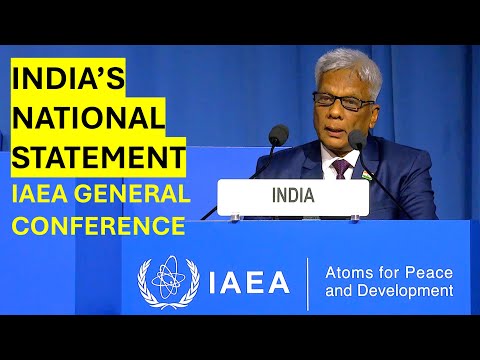



* Statement by Dr. Anil Kakodkar, Chairman, Atomic Energy Commission and the Leader of the Indian Delegation, at the 46th General Conference, IAEA, Vienna, 18th September 2002
Mr. President,
May I begin by congratulating you, on behalf of my Government and on my own behalf, on your election as President of the 46th General Conference. I am confident under your able leadership and with the support of your Team and the Secretariat of the Agency, this General Conference will be able to accomplish the tasks before it.
I also take this opportunity to welcome the entry of the State of Eritrea, Kyrgyz Republic and the Republic of Seychelles to the membership of the International Atomic Energy Agency (IAEA).
I would also like to pay a tribute to the wise and energetic leadership of Director General Dr. Mohamed El Baradei.
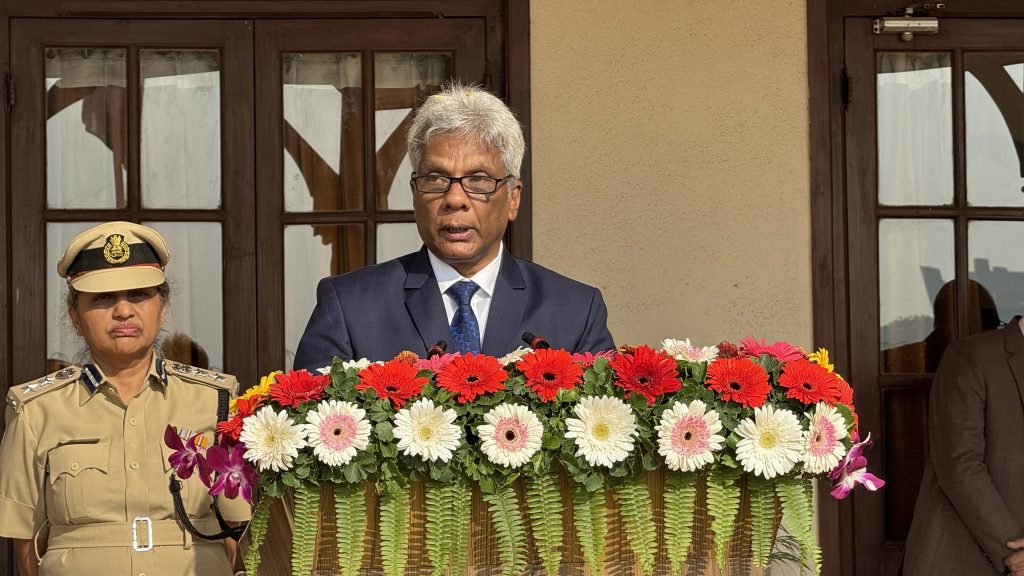
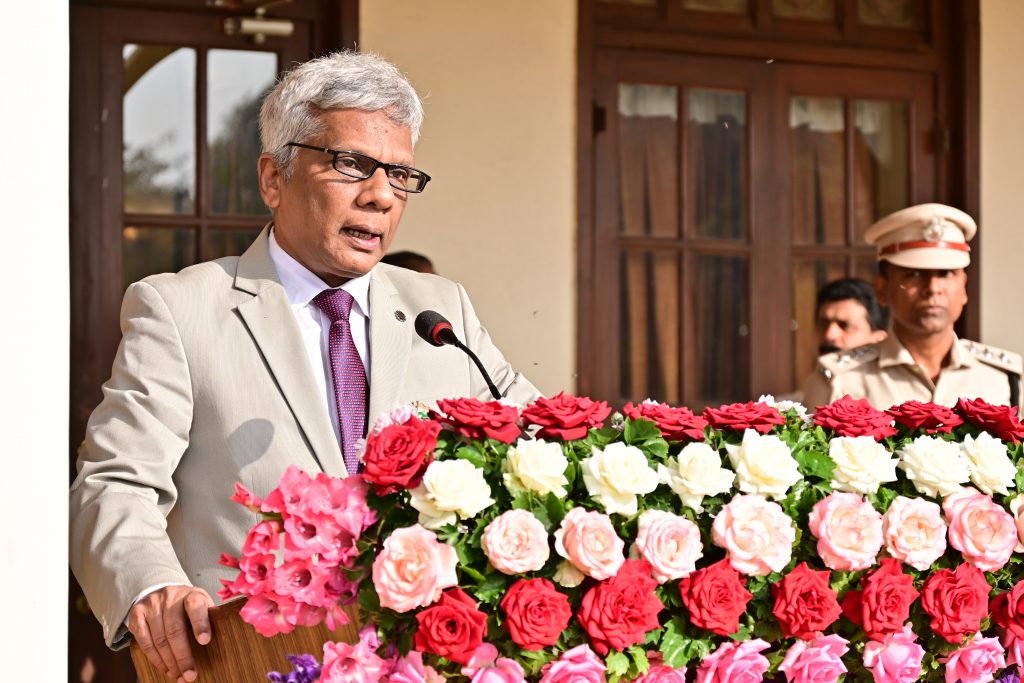
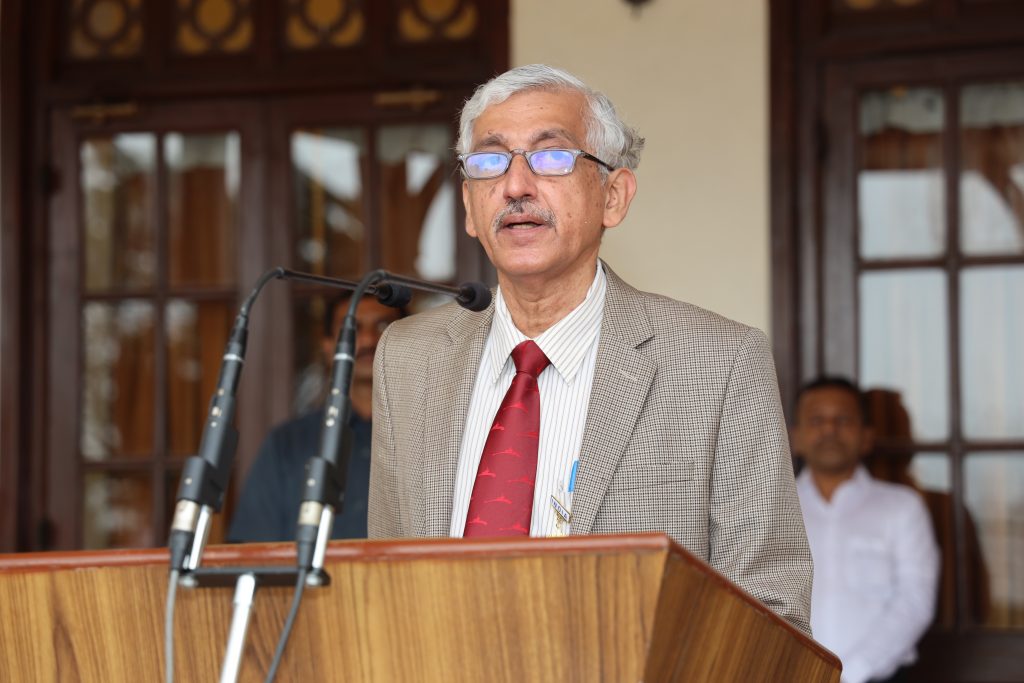
Dr. Anil Kakodkar, Chairman, AEC
addressing the General Conference of the IAEA |
2. Mr. President, It has been 45 years since this unique multidisciplinary international organisation has been functioning to fulfill its mandate to the satisfaction of all its stake holders. The Agency is a unique professional body in the area of nuclear science and technology with the ability and wherewithal to provide solutions to various issues concerning all of us. The Agency has not shied away from adding new dimensions to its activities, while maintaining a careful balance among all its statutory activities. This balance lies at the heart of the universal support the Agency enjoys.
3. Mr. President, the World Summit on Sustainable Development concluded a few days back. The threat to global climate as a result of unmindful energy use by the rich has presented before us a dual challenge of increasing access to electricity in adequate measure in the developing world and at the same time, reduction in carbon dioxide emission. Notwithstanding the important role of renewable and other clean energy technologies, given the magnitude of this problem, there can be no doubt that nuclear power is an inevitable option at the present state of development of advanced energy technologies which can meet the development aspirations of a large fraction of world population, while at the same time conforming to the criteria of sustainability. With the rapidly depleting fluid hydro-carbon fuels, the transportation sector would soon lead to a sharp increase in demand for nuclear energy as a sustainable and environmentally benign primary energy source. It is ironic that in spite of its large energy potential with the capability to meet the worldwide energy needs sustainably and without any significant real environmental impact, the unfounded misconceptions still dominate and have become impediments to sustainable development. All of us here at the IAEA should recognize our responsibility in this regard.
4. At the present juncture, one sees nuclear power simultaneously witnessing stagnation, renaissance and growth in different parts of the world. The Agencys document Nuclear Technology 2002 has captured this irony in a very apt way. During the 90s, the gross generation of nuclear electricity in Asia has grown by 63.7%, the global nuclear energy availability has increased from 73% to over 82% which is equivalent to adding 33 GW(e) of new generating capacity. There is growing activity for life extension of existing Nuclear Power Plants. This exercise again is equivalent to building new reactors in those countries. Policy and opinion makers should realise the positive contribution that nuclear energy can make in the context of climate change and sustainability before it is too late. An integrated view of technology, safety, safeguards and the newly emerging scenario with respect to nuclear terrorism is however necessary to find holistic answers which would eliminate the barriers to large scale development of nuclear power in a sustainable manner.
5. Recognizing the important role of nuclear power in meeting the long term energy needs of our people who constitute a sixth of world population, India has accorded high priority to self reliant development of nuclear power in the country. This has enabled a strong indigenous capability in all aspects of nuclear fuel cycle.
Presently, construction for 8 more reactors is in progress, which is the largest number of reactors currently under construction in any country. These units include four 220 MWe and two 540 MWe Pressurised Heavy Water Reactors of indigenous design and two 1000 MWe VVER units being set up in cooperation with Russian Federation. Together these reactors will add 3960 MWe nuclear capacity in our grids. Construction of all projects is progressing ahead of their respective schedules. The design, construction and operation of all nuclear power plants in India is at present done by the Nuclear Power Corporation of India Limited, which has the best credit rating and is among the best financially managed companies in the country.
Our 14 operating nuclear power reactors together have registered an impressive 85% overall average annual capacity factor during the last year and at the same time, have maintained an excellent safety record. WANO Expert Teams have carried out Peer Review of four nuclear power reactors in India. In line with keeping our commitments to the preservation of environment, most of the operating power plants have also obtained Environment Management System (EMS) certification as per ISO 14001.
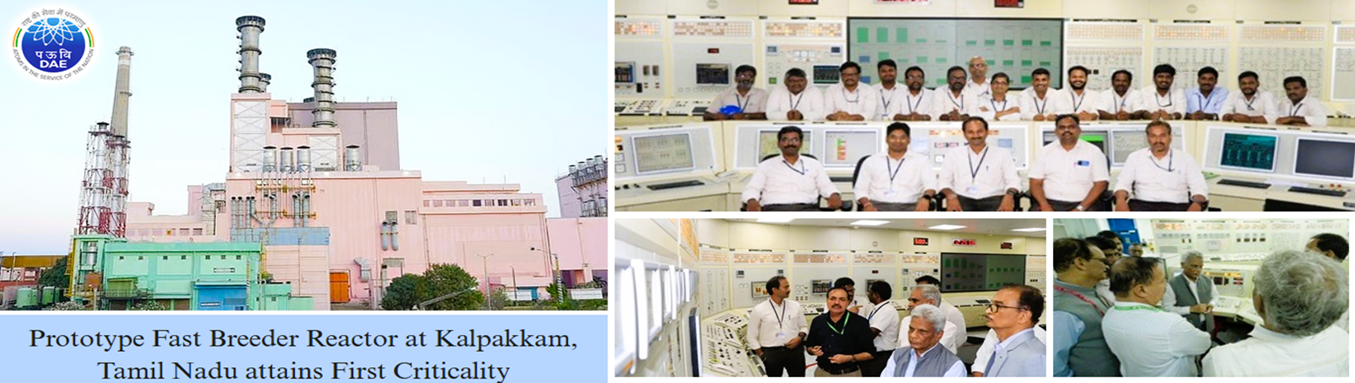
We would reach a total nuclear capacity of 6680 MWe by the year 2008 and intend to achieve 10,000 MWe by the year 2012 to reach the objective of 20,000 MWe by the year 2020. In order to achieve this, given the nuclear resource profile available within the country, we have also done considerable work on the design and development of plutonium-uranium oxide fuelled, 500 MWe Prototype Fast Breeder Reactor at Kalpakkam. While the pre-project activities for construction of this reactor are already in progress, we would soon launch the main project. The indigenous mixed uranium-plutonium carbide core of the Fast Breeder Test Reactor, which has been in operation since 1985, has recently reached a burn up of 100,000 megawatt day per tonne without a fuel failure.
The expansion of our nuclear power programme is being suitably backed up with the opening up of two new Uranium mines in the State of Jharkhand in India. We have also undertaken pre-project activities for the commencement of uranium mining at three more sites. We have been able to further reduce specific energy consumption in heavy water production resulting in further reduction of costs. This alongwith significant reduction in the construction schedule has enabled us to make nuclear power even more competitive. Our 220 MWe units are the smallest commercially competitive units available in the market today and could be of interest to some developing countries with constraints on resources and grid capabilities. We have also signed a contract to supply a small quantity of heavy water to the Republic of Korea this year. The Indian track record on export controls as well as fulfillment of its interna-tional obligations has been exemplary to the extent that India has, in fact, been described as a classic non-proliferator.
6. While the Indian programme is designed to cater to the long term energy needs of the country, the recent awareness of the impact of carbondioxide emissions on global climate has necessitated urgent actions to speed up large scale deployment of nuclear power in India, a country of more than a billion people on a fast track economic growth. A larger share of nuclear power in India would mean avoidance of carbon dioxide emissions in quantities significant on global scale. External additionalities in the nuclear power sector, for which there exists a large market in India could help this process further. The already profitable business of nuclear power generation in India would then become even more attractive.
However, our efforts to accelerate the already extensive achievements in development of nuclear power as a sustainable means of producing clean energy necessary for meeting development aspirations of one sixth of humanity are faced with restrictive export policies of certain countries. It is common knowledge that Indias nuclear programme is sui generis with indigenous and comprehensive capability and therefore, any proliferation concern on account of external supplies to India is unfounded, especially since these would be under facility or supply specific safeguards. Linking external additionalities to nuclear power development in India, the largest democracy with such irrelevant and unfounded concerns, is only going to increase the dependence on fossil fuel with associated damages to global environment.
7. Our atomic energy programme has accorded prime position to safety in all its activities and has kept up with the needs accompanied with the expansion of nuclear power programme as well as with the utilisation of nuclear technologies for research, health, agricultural, and industrial purposes. We have gained close to 200 reactor-years of operating experience with good track record of safety of the operating personnel, public and the environment. The Atomic Energy Regulatory Board (AERB), an independent regulatory body in India, ensures that safety measures in all our activities are in conformity with the international standards. AERB has also set up its own Safety Research Institute to independently supplement its research needs over and above the inputs available from various other laboratories in the country.
Needless to say that safety cannot be divorced from technology. This link was understood by experts while formulating the incentive Convention on Nuclear Safety. However, it is unfortunate that in practice, technologies continued to be denied even for systems important to safety. India was one of the early signatories to the convention on Nuclear Safety. We hope that conditions would soon become conducive for us to ratify the convention.
8. IAEAs International Project on Innovative Nuclear Reactors and Fuel Cycles (INPRO) is the most appropriate and timely activity to overcome barriers to growth of nuclear power for sustainable development of the world. We are convinced that such technological solutions are the need of the hour and provide superior, cost effective and comprehensive alternatives to the current segmental approach of dealing with technology, safety and safeguards separately. We have taken active part in this programme being run by the Agency on extra budgetary resources and have also provided cost free experts. I might also mention here that the Indian Nuclear Society will be dedicating a special session to INPRO during their annual conference scheduled this October. We are happy that several experts of the Agency will participate in this session. We feel that the time has come for the Agency to take up INPRO programme through its regular budget. As I have said earlier, this will be the most cost effective way to support sustainable development and at the same time, meet several other mandates of the Agency.
The Advanced Heavy Water Reactor (AHWR) development in India is a part of our effort to evolve an innovative reactor system with advanced safety features based on passive systems on one hand and use of thorium for energy production on the other. I am happy to inform this august gathering that a Detailed Design Report for AHWR is now ready. Detailed reviews prior to start of its construction are currently under way. Given the vast thorium resources available in our country, AHWR is an important development for us.
9. We are glad that the Agency promptly responded to the needs of Nuclear Security following the tragic events of September 11, 2001 including setting up of an Advisory Group on Nuclear Security. We should eliminate any possibility of terrorists exploiting the potential for using nuclear material and radioactive sources, particularly for blackmail. Though the prime responsibility for the security and safety of nuclear and other radioactive materials and nuclear facilities is and must rest with the States themselves, the Agencys additional activities can contribute meaningfully towards protection against nuclear terrorism. In the process, we should also ensure that it does not add to the sense of undue apprehension that exists in many quarters about the safety of use of nuclear energy for peaceful purposes. In this regard, we favour the framing of Public Awareness Programmes that would bring out inherent safety features and defence in-depth approach practiced in applications of nuclear energy. To support Agencys endeavours, we have undertaken to organize a dedicated international training programme on physical protection.
India has acceded to the Convention on Physical Protection of Nuclear Material. This reinforces Indias commitment to international instruments against terrorism in general and nuclear terrorism in particular. In India, for more than four decades, we have established strict physical protection measures for nuclear material during its use, storage and transport. A multidisciplinary expert group at the apex level ensures that appropriate measures are adhered to in this regard. These are being suitably upgraded with technological advancement. Besides this, an internal Physical Protection Advisory Service also exists. We have specially designed Human Resource Development Programme to train manpower at various levels for this purpose. Our delegation has been taking active part in the meetings of legal and technical experts to prepare draft amendment to the Convention on the Physical Protection of Nuclear Material.
The orphaned sources around many countries of the world have been a cause of concern. In the recent years, a number of radioactive sources have been discovered in Georgia. We are happy that indigenously developed and manufactured gamma radiation monitoring instruments have been useful to the Agency in its operation in the Republic of Georgia. We have collaborated with the Agency to provide equipment including an Aerial Gamma Survey System (AGSS), and services of our experts for conducting ground and aerial survey for the search of orphaned sources. We are gratified that both the Agency and the Government of Georgia have expressed appreciation for our experts and equipment.
10. Bhabha Atomic Research Centre (BARC) has designed, erected and commissioned a new facility for uranium separation. This plant will separate and purify U233 from irradiated thorium and other associated elements. Our experts have done extensive re-furbishing of the 40 MWt research reactor CIRUS. Commissioning work is now in progress to restart the reactor. BARC has also recently commissioned the second waste immobilization plant of India at Trombay.
A 10 tonne per hour low dose radiation processing facility for treating onions is undergoing commissioning trials at Lasalgaon in Nashik District of the State of Maharashtra. The Reverse Osmosis part of the Nuclear Desalination Demonstration Plant at Kalpakkam with a capacity of 1800 cubic metres per day was recently commissioned. In the agricultural field, 23rd mutant variety developed at BARC has recently been released for cultivation. This variety of groundnut, TG-41, is a large seed, confectionary variety with superior yield.
The Centre for Advanced Technology (CAT) in Indore has developed a laser based fuel pellet inspection system which automatically checks dimensions of pellets, its marks and surface defects. We have also developed an indigenous Titanium Humeral Megaprosthesis which is standardised, light weight and MRI compatible. This technology has already been used in several patients with excellent functional results. The Human Immunodeficiency Virus, a Western Blot Kit for the detection of HIV has been formulated in Tata Memorial Centre and has been marketed in India.
The Board of Radiation and Isotope Technology (BRIT), which is involved in commercial production of radioisotopes, has taken up a programme to facilitate setting up of indigenous radiation processing facilities. It has worked with several entrepreneurs in private and cooperative sectors for establishing the radiation processing units for spices and food items. With the setting up of 16.5 MeV medical cyclotron at our Radiation Medicine Center in Mumbai, BRIT would be in a position to support a number of PET systems in the city of Mumbai and nearby.
11. India continues to take an active part in the activities of International Atomic Energy Agency (IAEA). Last year we offered training facilities and scientific visits to 57 scientists from the Member States and provided the services of 60 scientists for expert assignments to other countries. We are glad that Agency continues to give importance to Coordinated Research Projects (CRP) for they are the forerunners to any evolving technical cooperation programme.
The Board of Governors has recently concluded its lengthy negotiations on Technical Cooperation Fund (TCF) for the years 2003 and 2004 and the Indicative Planning Figure for the years 2005 and 2006. A marginal increase has been approved, but it is not sufficient to maintain even the activities at the level of the previous year. Considering that the technical cooperation is vital to the Agencys relevance to many developing countries, there is an imperative need to ensure that TCF grows at least at the same pace as the regular budget and the budget formulation process in this regard made identical to that of the regular budget. Needless to mention here that India has always paid its contribution in full and on time.
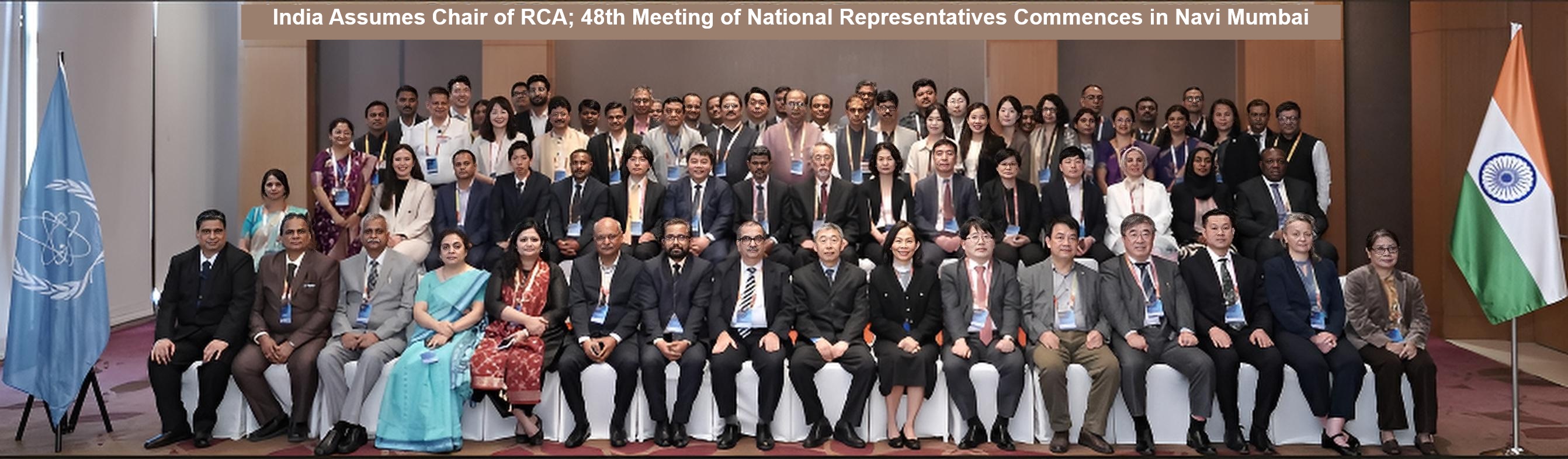
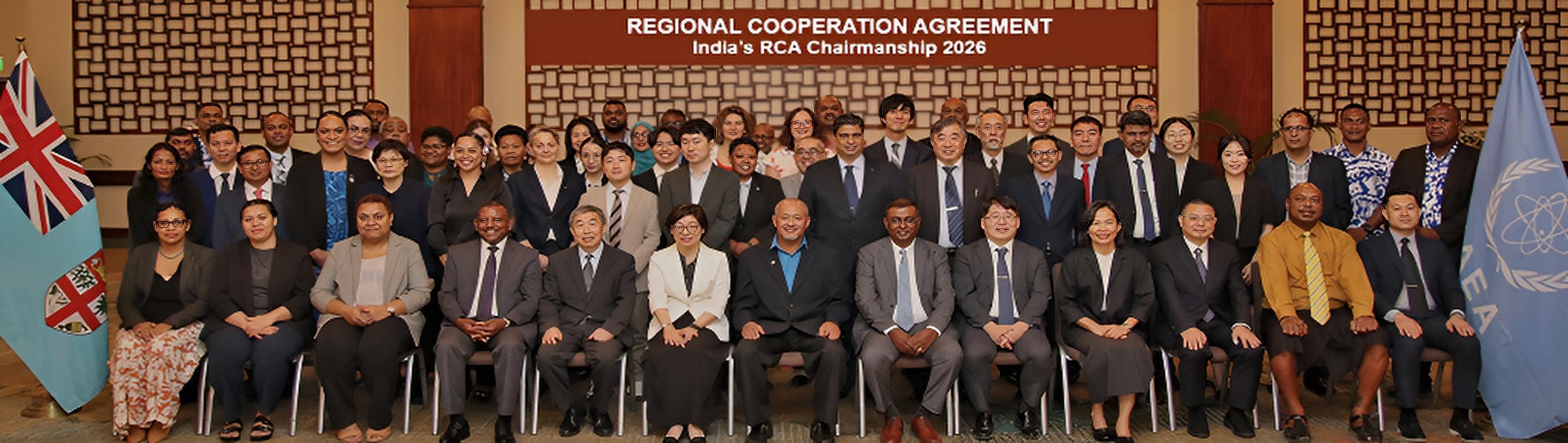
The Regional Cooperative Agreement for Asia and the Pacific Region (RCA) is the first Regional Cooperative Agreement of the Agency and is based on the successful India-Philippine-Agency Project (IPA Agreement) in 1964. RCA is celebrating its 30th Anniversary this year. As founder member, India has been taking a lead role in all its activities. RCA has served as a classic example of Technical Cooperation among the Developing Countries (TCDC).
12. We are glad that Agency is rightly seized with the issue of knowledge management. Concerns about nuclear knowledge in some parts of the world is an important challenge. Agency had organised a high level meeting of senior officials from academia, government, industry and other relevant organisations in mid June this year. I had the opportunity to participate in this meeting. The scientific forum this year is also addressing this important issue. Nuclear knowledge pool in India is very large and is growing in tune with the rapid growth of nuclear energy programme in the country.
One of the challenges that all of us engaged in nuclear technology development must address is to drive knowledge based holistic approach to the entire gamut of technology-society interface. Further, the linkage between the society, the industry and the national programme must be visible to the students right at the stage of their higher education so that they recognise that there are challenges that need solutions and are motivated to solve them. We need to distinguish knowledge transfer from technology transfer, which has obvious constraints arising out of commercial connotation. Knowledge on the other hand is enhanced by sharing with worthy scholars who can sustain the process and also with those who can translate it to finding new solutions of societal interests.
To conclude, Mr. President, I must emphasise that any technology will have its associated problems, but the solutions to such problems also lie in technology. There are several examples in the evolution of civilization where technology has enabled enhancement of quality of life. In the process some new issues of concern arose; however, such issues were satisfactorily resolved through further application of technology. We have seen this in the context of energy, transportation, material processing, food, human health and many other areas of human endeavor. Technological empowerment is thus the need of the hour.
The work of this agency has shown the immense potential for sustainable development through the use of nuclear knowledge and technology. Continuity in nuclear knowledge and empowerment in nuclear technology for global peace and prosperity is our collective responsibility and we can achieve it through this unique organization.
Thank you, Mr. President.