


nidec heading.jpg (27171 bytes)

Contents

Kaiga Atomic Power Station
Nuclear Power Plant Simulator
R&D Pilot Plat at Heavy Water Plant, Talcher
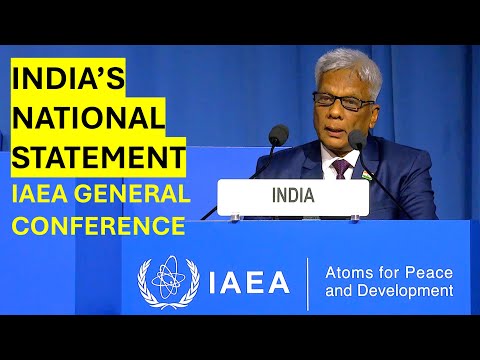
Statement by Dr R Chidambaram, Chairman, Atomic Energy at IAEA, 43rd General Conference, Vienna, (Sept 27- Oct 1,1999). September 28, 1999
ANUPAM-Pentium Super Computer
ISOMED: Two and a Half Decades of Service
GRACE : The Spectral Window to the Cosmos
Founder's Day 1999 Celebrated at Trombay
 
Technical Documemnt on radiation processing of Food
DAE Ensures Y2K Readiness
National Seminar on Peaceful Uses of Atomic Energy
Chairman, AEC will be honoured with Nayudamma Award
Sausheelya
Journalists' Workshop
DAE Exhibition on Nuclear Science and Technology

KAIGA ATOMIC POWER STATION

kaiga.jpg (40873 bytes)

The state-of-the-art indigenously designed 220 MWe pressurised heavy water reactor (PHWR) of the Kaiga Atomic Power Station attained criticality at Kaiga on September 24, 1999. Based on the operating experience of the earlier pressurised heavy water reactors in India, a number of modifications have been made in the Kaiga Project.There are now 11 atomic power reactors in operation in India. The second reactor at Kaiga will achieve criticality next year.

Kaiga, situated at 56 km east of Karvar and 13 km upstream of Kadra dam on the left bank of Kali river, is a beautiful location surrounded by evergreen hills with thick forest cover. The site has been selected for having six Reactor Units of pressurised heavy water reactors each of 220 MWe.


INDIA’S FIRST NUCLEAR POWER PLANT SIMULATOR

India’s first nuclear power plant simulator at the Nuclear Training Centre (NTC), Rajasthan Atomic Power Station (RAPS), Kota was upgraded with state of the art technology systems and re-commissioned on October 1, 1999.

npcsim1.jpg (30656 bytes)

Commissioning of Training Simulator was inaugurated by Ch.Surender, Executive Director (Operations), Nuclear Power Corporation of India Ltd.

To ensure safety in the operation of nuclear power plants, comprehensive training of its operators in all phases of the plant operation is essential. Simulators are a vital tool for this purpose. To meet the training objectives, a nuclear power plant training simulator was commissioned by the Nuclear Power Corporation of India Ltd. (NPCIL) at the Nuclear Training Centre, RAPS in 1989. A programme was undertaken by NPCIL to upgrade the simulator with the state-of-the-art technology. The objective of the programme was to incorporate operational experience in the simulator and thereby increase the scope of simulation, enhance its fidelity and add RAPS-2 specific features.

The RAPS simulator offers many facilities in the training of nuclear power operators. It permits creation of scenarios that seldom occur, as well as many postulated ones. It permits the operators to hone their skills in handling various plant situations without any fear of damage to the plant equipment or loss of electricity generation. It also permits repetition of an exercise to ensure that the operators are trained to a uniform standard.

The simulator incorporates control panels similar to those used in the plant and covers all normal operations of the Unit-1 of RAPS. In addition, it provides training in the handling over 300 malfunctions of different equipment in the plant. Since its commissioning in 1989, the simulator has been used in training a large number of operators and engineers from various nuclear power stations and DAE organisations.

The first batch of nuclear power plant operators from the Madras Atomic Power Station has undergone a 4 - week training session on the newly upgraded simulator.


R&D PILOT PLANT AT THE HEAVY WATER PLANT TALCHER INAUGURATED

Dr. R. Chidambaram, Chairman, Atomic Energy Commission inaugurated a research & development Pilot Plant for production of metal extractants at the Heavy Water Plant, Talcher on September 3, 1999.

Inaugurating the pilot plant Dr. Chidambaram acclaimed the efforts put in by the scientists and engineers of the Heavy Water Board and Heavy Water Plant, Talcher in setting up the facility in a record time. It fulfils the long standing need of the DAE in high quality solvents. He mentioned that this facility is a true example of synergy between multidisciplinary groups of the Department.

Shri H.S. Kamath, Chairman, Heavy Water Board, in his opening remarks stated that with the commissioning of this facility, the Board has proved its capability in developing complex technology from concept to commissioning.

The plant will produce Organo phosphorus Solvent D2EHPA (Di-2 Ethyl Hexyl Phosphoric acid) based on the process developed at BARC. Organo phosphorus Solvents constitute an important class of metal extractants and find wide ranging applications in nuclear and conventional hydrometallurgy for recovery and separation of uranium, vanadium, beryllium, yttrium, zinc, nickel, copper and other rare earths. The manufacturing technology, hitherto not available in the country, involves highly specialized equipment, machinery and handling techniques. The set commissioned recently has yielded in trial runs a product which is at par in qualigy with those manufactured internationally. The project is the result of the coordinated multi-disciplinary team work between HWB, Mumbai, Materials Group of BARC, HWP-Talcher and Industry.

(Source : DAE Press Release 10/09/99)


}...... a situation should not develop where many countries which urgently need to harness all available options of energy to improve their living conditions are hesitant to venture into this area as they feel frightened by "safety" and threatened by "safeguards" ..... ~

Mr President,

May I begin by congratulating you on behalf of my delegation and on my own behalf on your election to the Presidency of this General Conference. I am confident that under your able guidance this General Conference will successfully accomplish the tasks assigned to it. I would also like to take this opportunity to welcome the entry of Angola and Honduras to the membership of the IAEA.

I have great pleasure in reading a message from the Prime Minister of India, Mr Atal Bihari Vajpayee:

"The 43rd General Conference of the Agency marks the end of an era. But as we know every end is also a beginning. A new millennium beckons us. And we, as responsible member States, must rise to the occasion and ensure that we leave behind a legacy, not a liability, for future generations.

We can best ensure this by returning to the fundamentals, shorn of all rhetoric and verbiage and by acknowledging that the primary function of the Agency is to encourage and assist research, development and practical applications of atomic energy for peaceful purposes throughout the world. In developing countries, atomic energy, with its multifarious applications in power generation, improving health standards, enhancing the quality and quantity of agricultural yields, in controlling pests and in water resources management, is seen as the key to a better tomorrow. The International Atomic Energy Agecy’s role in the

One quantifiable measure of economic development of a country is the per capita consumption of electricity. For Indians to reach a standard of living which will be somewhat comparable to those living in developed countries it has been estimated that the per capita consumption of electricity should increase at least by a factor of 8 to 10. ...

In the coming century nuclear energy will account for an increasing share of the electricity mix in India.

nuclear power area is particularly significant as this source, with the progressive depletion of fossil fuels, is an important option for satisfying the future energy needs of developing countries in the long term.

I take this opportunity to wish the 43rd General Conference of the IAEA all success in its deliberations.

Early last year the Director General had appointed a Senior Experts Group (SEG) to carry out a basic overview of the programmes of the Agency as well as to provide strategic thinking, practical advice and recommendations for the future orientation and activities of the Agency. The group has submitted its recommendations, which could serve a basis for planning the future programme of the Agency. The most important conclusion of the SEG was that, I quote, "the Statute has rather admirably stood the test of time and remains a valid and viable foundation for the Agency’s activities into the foreseeable future. Thus, the Agency’s ‘mission’, as drawn from Article II of its Statute remains: ‘The Agency shall accelerate and enlarge the contribution of atomic energy to peace, health and prosperity throughout the world.’ unquote.

Among these peaceful applications of nuclear energy, and from the standpoint of developing countries and looking at their possible access today and in the future to fossil fuel resources of the world, nuclear power generation is the foremost. While the decision to pursue the nuclear power option is no doubt a national one, the Agency’s mandate to promote in an objective manner the contribution of atomic energy to peace, health and prosperity should not be eroded while it discharges its responsibilities of helping to ensure safety and implementing safeguards. Increasingly, the Secretariat has become diffident on nuclear power related matters, perhaps influenced by the environment in which it is located, where power generation, having reached a point of saturation, finds it difficult to find support for new nuclear plants. However, while nuclear power may be stagnating in Europe and North America, it is growing fast in Asia and some other parts of the world where it is being looked upon as an inevitable option to satisfy future energy needs.

An Advanced Heavy Water Reactor (AHWR) using plutonium and Uranium233 as fuel is being designed at the Bhabha Atomic Research Centre (BARC). AHWRs constitute a part of the third stage of our nuclear power programme which will mark a transition to thorium based systems as it will use as fuel the U233 obtained by the irradiation of thorium in PHWRs and FBRs.

Nuclear power becomes even more relevant in the context of global environment considerations. Presently, it accounts for the avoidance of 8 % of global carbon dioxide emissions. It is unfortunate that the Kyoto Conference on the Convention on Climate Change did not explicitly mention "nuclear" among the cleanest sources of energy despite the Agency’s efforts in recent years in projecting nuclear energy as one of the means for mitigating carbon dioxide emissions under the Clean Development Mechanism (CDM) evolved under the Kyoto Protocol of the UN Convention on Climate Change.

Recognising the importance of the role of nuclear energy especially in developing countries, India hosted an international seminar on "Nuclear Power in Developing Countries: Its potential Role and the Strategies for its Deployment" in Mumbai in October 1998. We thank the Agency for the assistance extended to us in organising the seminar. We were also happy to receive the Director General of the IAEA Dr Mohamed El Baradei on his official visit to India in February this year. I must add here that it was gratifying to hear the DG mentioning in his speech yesterday morning, technology as one of the pillars of the Agency.

One quantifiable measure of economic development of a country is the per capita consumption of electricity. For Indians to reach a standard of living which will be somewhat comparable to those living in developed countries it has been estimated that the per capita consumption of electricity should increase at least by a factor of 8 to 10. Internal reviews have led us to conclude that in the coming century nuclear energy will account for an increasing share of the electricity mix in India. It is our endeavour to reach 20,000 MW(e) of nuclear power by the year 2020 as a first step. In the last one year our efforts to accelerate our nuclear power programme to reach that target have borne fruit. The performance of our ten nuclear power plants in the last three years has been improving consistently. In 1998-99 the overall capacity utilisation was 75%. For the period from April to August 1999 the capacity utilisation touched a high of 78%. One of the two Pressurised Heavy Water Reactor (PHWR) units in Rajasthan, RAPS-2, has been producing power continuously since June 6, 1998 after successful enmasse replacement, with 100% indigenous technology, of 306 radioactive coolant channels. I am happy to announce that a state-of-the-art indigenously designed 220 MW(e) PHWR attained criticality at Kaiga a few days ago on September 24. Another 220 MW(e) PHWR, the third unit in Rajasthan is expected to reach criticality in a couple of months’ time. Work on the second unit in Kaiga and the fourth unit in Rajasthan are in an advanced stage of completion. In addition, construction work commenced on the two 500 MW(e) indigenously designed PHWR reactors at Tarapur last October. The preparation of the Detailed Project Report (DPR) for the construction of two 1000 MW(e) VVERs at Kudankulam in technical cooperation with Russia is underway and is expected to be completed in 2001.

To ensure long term energy security India has chosen to follow a "closed-fuel cycle" policy which calls for the setting up of reprocessing plants and breeder reactors. Our Fast Breeder Test Reactor at Kalpakkam, over a decade old, has achieved all technological objectives. The indigenously developed and hitherto untried, mixed Uranium-Plutonium carbide fuel has reached a burn-up level of 49,000 MWd/t (upto July 1999) and has performed excellently as revealed by post-irradiation examination. A programme of irradiation of zirconium-niobium capsules for irradiation creep measurements was carried out. With the rich experience gained from the FBTR operation, the indigenous design and development of the 500 MWe Prototype Fast Breeder Reactor (PFBR) is progressing well and the construction is expected to begin in 2001. The preliminary Safety Analysis Report on Reactor Assembly, Heat Transport System and Component Handling have been completed. A four legged walking robot for in-service inspection of the PFBR steam generator has been designed and developed.

In our quest for improving the quality of life the role of technology is pre-eminent. Without constant refinement technology loses its utility. The IAEA is a unique multi-disciplinary science and technological agency within the UN system. It should continue to be guided by the principle that its credibility is based on its scientific and technological competence.

Mature technologies for reprocessing, waste management and recycle of plutonium have been demonstrated and are available. Progress is under way on the thorium-uranium-233 cycle also. In this context, it is worth mentioning that because of our great interest in the closed nuclear fuel cycle, we have always considered spent fuel as a vital resource material. This was emphasised by us during the negotiations on the Joint Convention on the Safety of Spent Fuel Management and on the Safety of Radioactive Waste Management. The closed fuel cycle, adopting a "reprocess to recycle Pu" approach after extended period of spent fuel storage, has several advantages. It renders reprocessing and nuclear waste management a more viable and safe technology, with reduced Man-Rem expenditures, since it minimises the complication due to the presence of americium-241 in the recycled fuel fabrication process. The planning of reprocessing capacity should be such that the needs of the fast reactors/advanced PHWR, etc. which facilitate the utilisation of Plutonium and thorium, while reducing the input of natural uranium (in the process realising the much higher energy potential of uranium) can be met on "Just in Time" basis, which is a very important concept in materials management. Americium is not of any proliferation concern and this has also been borne out by the Board’s recent decision in this regard.

An Advanced Heavy Water Reactor (AHWR) using plutonium and uranium-233 as fuel is being designed at the Bhabha Atomic Research Centre (BARC). AHWRs constitute a part of the third stage of our nuclear power programme which will mark a transition to thorium based systems as it will use as fuel the U-233 obtained by the irradiation of thorium in PHWRs and FBRs. Our 30 kWt experimental reactor, KAMINI at Kalpakkam using indigenously fabricated U233 based fuel has attained its full power. The facility is being used for neutron radiography and also for various experiments related to neutron activation analysis.

The power programme has a support base ranging from fuel fabrication to electronics and heavy water facilities. Based on design and development at BARC, the Electronics Corporation of India Limited (ECIL) has produced the Supervisory Control & Data Acquisition (SCADA) system for switchyard and power equipment for the new power stations in Rajasthan. This is a sophisticated system which provides for the monitoring from the main control room of the status of various power equipment in the nuclear power station and permits the operation of circuit breakers and isolators in the switchyard. The Nuclear Fuel Complex (NFC) developed a novel method for production of seamless zircaloy-4 square channels for the two Boiling Water Reactors (BWR) at Tarapur which were hitherto imported. The zircaloy-4 square channels are manufactured from seamless tubes employing a square die and a draw bench.

The past year has also been an excellent year for the safety record of our facilities. The Nuclear Power Corporation of India Ltd. (NPCIL) is a member of the World Association of Nuclear Operators (WANO) and actively participates in WANO activities. In January 1998, a WANO peer review was conducted at the Kakrapar nuclear power plant. Another WANO peer review has been planned at the Narora nuclear power plant in early 2000.

The Atomic Energy Regulatory Board (AERB) stringently monitors the safety record of India’s nuclear facilities.. The AERB has set up an independent Safety Research Institute whose main objective will be to carry out and promote safety related research and analysis in areas relevant to regulatory decision making. In the context of the Y2K problem, the Government of India has set up a High Level Action Force to monitor the status of preparedness in various sectors of the economy. Atomic Energy has been identified as one of the 11 critical sectors in which an in-depth review has been undertaken. The various stages of the review including inventory preparation, detailed assessment and remediation have been implemented. In addition, detailed contingency plans have also been drawn up. Further, towards fulfilling its mandate as an independent regulatory body, the AERB has set up its own committee to monitor and ensure that overall safety is not in any way affected by Y2K related problems.

We are now actively considering India’s accession to the Convention on the Physical Protection of Nuclear Materials. Since, in practice, we have been for long adhering to the standards of physical protection prescribed under the Convention, this would only mean a formal acceptance of the objectives of this Convention.

We appreciate the Agency’s efforts in preventing illicit trafficking in nuclear materials. Clandestine acquisition of sensitive technology has occasionally occurred because preventing this also requires the commitment of all the Member States of the Agency. In this connection, let me mention that India’s nonproliferation credentials have all along been impeccable. We have in place export control mechanisms which have effectively ensured that no material, equipment or technology exported from India has been misused. It is, therefore, no surprise that analysts have characterised India as a "classic non-proliferator". India’s commitment to global nuclear disarmament stands undiluted.

Since its inception, our nuclear programme has been characterised by a holistic approach. Thus, while power generation is indeed a matter of priority, non-power applications of nuclear energy in areas such as medicine, agriculture and industry are given equal emphasis in our R&D programme. The Isomed Plant, the facility in Trombay for sterilisation of medical products operated by the Board for Radiation & Isotope Technology (BRIT), has completed 25 years of successful operation and has been providing sterilisation service to medical industries in and around Mumbai. There are three other such units functioning in different parts of the country. Three units of Gamma Chamber 5000 have been supplied to Indonesia and Myanmar through the IAEA and to Egypt against open global tender.

With a population of nearly a billion, food security is a crucial issue for us. Radioisotopes are being used to improve fertilizer use efficiency, monitoring the fate and persistence of pesticides in soil, ground water and environment, reduction of post-harvest losses by extension of shelf life and preventing damage from insect and microbial contamination. Research efforts at BARC have resulted in 22 mutant varieties for commercial cultivation. Radiation processing of a wide variety of food items have been undertaken since 1994. A commercial facility for radiation processing of spices is nearing completion at Navi Mumbai. The Radiation Medicine Centre which pioneered nuclear medicine in India is involved in R&D in health science using radionuclides. Recently, we have tied up with a Veterinary College in Mumbai to extend nuclear medicine facilities to small animals such as dogs, cats and goats. Subsequently, this facility will be extended to large animals. During the year, the Tata Memorial Hospital (TMH) Tissue Bank contributed to the development of the Multimedia Distance Learning Package on Tissue Banking produced under the Regional Cooperative Agreement (RCA) for Asia and the Pacific under the auspices of the IAEA. In fact, a wide range of R&D activities fall under the RCA including research reactor utilisation, radiation protection, tracer technology and electron beam applications. Recognising the importance of human resources development we have hosted several regional workshops and training courses under the RCA programme in the last year. Altogether we have hosted 15 IAEA events in India during the period.

India continues its staunch support to the Agency’s Technical Cooperation Activities. As in the past we are happy to pledge the full amount for the Technical Cooperation Fund for 2000 and payment will be made on time as in previous years. Last year we had called on the Agency to identify centres of excellence for human resources development under the Technical Cooperation for Developing Countries (TCDC) programme and had offered our training facilities to scientists and engineers from developing countries. We would like to reiterate our offer.

While the results of applied research are tangible immediately, there would be no progress without investing in fundamental research. We have an extensive network of institutions under the Department of Atomic Energy engaged in fundamental research. At the Tata Institute of Fundamental Research (TIFR), a LINAC booster for the existing Pelletron Accelerator has been developed. The cryogenic aspects of the design and fabrication has resulted in a spin-off for the cryogenic industry in the country with many engineering problems being solved for the first time. A 450 MeV Synchrotron Radiation Source (SRS) Indus-1 became operational at the Centre for Advanced Technology (CAT), Indore in April 1999 and the first results from the experiments are expected to be available by the end of the year. We have an abiding interest in fusion because of its potential for clean and safe power generation and have set up an experimental programme at the Institute for Plasma Research, Gandhinagar. The first indigenously built tokamak ADITYA has been operational since 1989 and has led to significant discoveries on intermittency and bursty transport due to coherent structures in tokamak edge turbulence. Our second generation experiment - a steady state superconducting tokamak, SSTI is currently under fabrication and is likely to be the first such experiment in the world to generate 1000 second plasma pulses.

In our quest for improving the quality of life the role of technology is pre-eminent. Without constant refinement technology loses its utility. The IAEA is a unique multi-disciplinary science and technological agency within the UN system. It should continue to be guided by the principle that its credibility is based on its scientific and technological competence. This can be maintained only if the Agency keeps itself at the forefront of nuclear science and technology by assisting in the coordination of research and development programmes among interested Member States and institutions. Towards this end, research in frontier areas such as innovative reactors and thermonuclear fusion should be actively encouraged. It is important to realise that fusion plasma research not only prepares one technologically to reap the benefits of fusion power when available, but also leads to the development of spin-off technologies in the areas of large volume UHV systems, cryotechnologies, large copper and superconducting magnets, AC and DC power systems, sophisticated data acquisition and control systems, lasers, microwave and spectroscopic diagnostic system, etc. The IAEA has played a crucial role in the context of the International Thermonuclear Experimental Reactor (ITER) programme. A similar platform could be provided to non-ITER countries to think of joint long term activities and to foster linkages with ITER.

The issue of funding the Agency’s Verification of Nuclear Arms Control and Reduction Measures has been discussed both at the BoG and outside. In keeping with the "Swords to Ploughshares" concept propounded in the early days of the Agency it would be appropriate to encourage activities to facilitate the peaceful uses of weapons surplus material as fuel for nuclear power reactors and also for harnessing spin-off technologies. Economic gains from such activities, which should be open for participation to all countries without discrimination, could be used to meet part of the costs. Such an approach would also enable us to make further progress towards sustainable development in a spirit of balance between the promotional and verification activities of the Agency thereby converting the proposed Fund to a "Development through Disarmament" Fund.

As we enter the next century and the beginning of a new millennium it would be worthwhile to hark back upon the words of the founding fathers of the IAEA to see whether the Agency has indeed remained faithful to its original mandate. In 1956, at the Conference on the Statute of the IAEA at New York, Homi Bhabha, while recognising that the problem of safeguards is one of the most serious and complicated one facing the Agency, cautioned against the creation of a safeguards system which would be unrelated to the realities of the world we live in and which would reduce the Agency from being a positive creative force to a police body. However, those warnings have not been heeded and, unfortunately the changed orientation has overshadowed the original character of the Agency as a promoter of atomic energy. I am worried that a situation should not develop where many countries which urgently need to harness all available options of energy to improve their living conditions are hesitant to venture into this area as they feel frightened by "safety" and threatened by "safeguards". Let it not be forgotten that knowledge when stifled atrophies and the world’s nuclear heritage is too precious a resource to be allowed to dissipate.

And this brings me to what I wish to say in conclusion. I must reiterate what I recalled at the outset of this presentation, from the report of the Senior Experts Group, that the Agency’s mission should remain to be to accelerate and enlarge the contribution of atomic energy to peace, health and prosperity. And I have also discussed how nuclear power is the centrepiece of human development because of it having become the inevitable future option for expansion of electricity generation in the developing countries of Asia and other regions of the world. Over the last more than half a century, several nations developed nuclear technology for power generation through multiple approaches. And some of the countries which took the lead in this endeavour, especially the USA, the UK and in Europe, have, as a result of saturation of their electricity generation, decelerated or halted technology development while some other countries, of which India is one, have proceeded at a steady pace in adding to nuclear power generation and are persisting with technology development programmes. Clearly, the most desirable direction for the future is to go forward in operationalising simpler, innovative technologies for lower cost and, at the same time, ever-safe nuclear power generating systems. I would like to strongly make a plea that it is in helping to pool together the expert resources of the different nuclear capable countries for succeeding with these objectives lies the Agency’s role henceforth in fulfilling its mandate handed down by Article II.

However, I must note here that cooperative arrangements aiming at synergistic outputs involving a limited number of countries, especially those limited to countries saturated with more than adequate power production, are unlikely to meet the key need of the hour which is to serve the best interests of countries choosing the nuclear energy option to satisfy their unfulfilled and growing electricity requirements. The IAEA must appreciate its unique position as the only international organisation, not only in the UN family but also in a global sense, to bring about the widest possible participation in, and thereby access to benefits from, wholesome international cooperation. The IAEA owes this to its Member States.

Thank you, Mr President.

Statement by Dr R Chidambaram,

Chairman, Atomic Energy Commission and Leader of the Indian delegation.

International Atomic Energy Agency (IAEA) . 43rd General Conference, Vienna, (Sept 27- Oct 1,1999). September 28, 1999


ANUPAM-Pentium Super Computer

With the prime objective of meeting in-house requirement of solving very large computational problems, BARC had initiated in 1991 research & development in supercomputing systems based on parallel processing techniques. The Centre has now perfected the technology of designing super computers based on parallel processing techniques. It uses personal computers as compute-nodes and high speed network switches for intercommunication. Dr. H K Kaura, Head, Computer Division, BARC describes here the development.

Using 16 personal computers based on Intel Pentium II, microprocessor operating at 333 Mega hertz clock and a 100 megabits per second ethernet switch, an ANUPAM Pentium super computer was developed in March 1999. This super computer gives a sustained speed of 1300 million floating point instructions per second (Mflops) for solving very large computation -intensive jobs which is more than three times the speed of CRAY/Y-MP class of super computers.

The speed available on ANUPAM-Pentium super computers can be easily enhanced by using the latest personal computers based on Intel PIII microprocessors operating at 550/700 mega hertz clock and faster gigabit ethernet switches operating at 1000 mega bits/second. Based on this ANUPAM-Pentium parallel processing technology available at BARC, a 128 node ANUPAM-Pentium super computer, using the latest Pentium PIII processors as nodes, can be easily configured within a short period of 2-3 weeks of the procurement of the components which can provide a sustained speed of 15,000-16,000 mega floating point instructions per second (Mflops).

The ANUPAM Pentium series of systems are based on industry-standard personal computer hardware and fast network switches. These super computers being extremely reliable and highly cost effective, have opened a flood gate of opportunities to scientists and engineers involved in front-line research and development for solving very large compute - intensive complex computational problems.

First super computer based on parallel processing techniques was developed at BARC in December 1991. It made use of four processors based on Intel’s i860 microprocessor operating at 40 mega hertz as nodes and industry standards multibus for intercommunication, giving a sustained speed of 30 Mflops which was about 5 times faster than the speed of super computers available indigenously at that time. The computational power available on the series of ANUPAM-860 system was further enhanced to 8 nodes in August 1992, 16 nodes in November 1992, 32 nodes in February 1994 and 64 nodes in November 1995, giving the sustained computational speeds of 30, 52, 110, 190 and 400 Mflops respectively.

Subsequently the ANUPAM-Alpha parallel processing systems based on the Digital’s Alpha 21164 microprocessor, operating at 400 mega Hertz clock, as node processors and industry standard 155 Million bits per second ATM (Asynchronous Transmission Mode) switch as interconnecting network, were developed. A 6 node ANUPAM-Alpha system developed in July 1997 gave a sustained speed of 970 Mflops and a 10 node ANUPAM-Alpha developed in March 1998 gave a sustained speed of 1500 Mflops.

Recently the computing speeds available of personal computers based on Intel’s latest microprocessors have increased to a level, almost matching the speed of RISC processor based computers. Also personal computers are readily available at very low cost. This has led to the development of ANUPAM-Pentium series super computers. A 4-node ANUPAM-Pentium based on Pentium II operating at 266 mega Hertz clock as nodes and a 100 megabits per second ethernet switch for intercommunication, giving a sustained computing speed of 248 Mflops was developed in July 1998. The processing power of ANUPAM-Pentium was further enhanced to 1300 Mflops in March 1999 by using 16 node of Pentium II operating at 333 mega Hertz.

anupam.jpg (22776 bytes)

The ANUPAM Pentium super computer has distributed memory switch based architecture and it is using message passing techniques for inter-processor communication. The system can be configured with LINUX or Window NT operating system on all the nodes. Each node has full complement of software consisting of FORTRAN F70 and F90, C, C++ compilers and other program development tools. The nodes in the parallel processing super computer ANUPAM-Pentium communicate with each other through a message passing library ANULIB, developed in-house. It has been found to be very simple to use and more efficient as compared to other available MPI and PVM message passing libraries for parallel processing.

The ANUPAM-Pentium super computer is also supported by many other parallelising tools such as a software simulator, PSIM, a debugger, PRE, a static program flow analyzer for FORTRAN programs, FFLOW and a syntax checker for ANULIB program, SYN etc.

The parallel processing super computers make use of a number of independent processors, interconnected by high speed communication networks, operating in such a manner that all the processors in the system participate in the execution of various portions of a large computational job in close cooperation so that the job is effectively executed at super computing speed.

All the three series of super computers: ANUPAM-860, ANUPAM-Alpha and ANUPAM-Pentium have been extensively used for solving some of the very large computational problems for BARC as well as other organisations in the country in the fields of Protein Structure Optimization, ab initio Electronic Structure Calculations, Neutron Transport Computations, ab initio Molecular Dynamics Simulations, Computational Structural Analysis, Computational Fluid Dynamics, Simulation studies of Gamma Ray Astronomy, Weather Forecasting etc. Because of extremely high reliability and very high computational speed available on ANUPAM systems, it was possible to solve some of the very large, complex problems which otherwise would have been impossible to execute on any other super computer system available in the country.

ANUPAM series systems have also been proved very useful in solving a long standing problem of replacing obsolete CRAY-X/MP super computer used for weather prediction at National Centre for Medium Range Weather Forecasting (NCMRWF) New Delhi. All the programs currently running on CRAY super computer have been implemented on a 4 node ANUPAM-Alpha system. The total time for execution of the presently operational suit of program takes about five hours which is slightly less than the time taken on GRAY-XIMP. The ANUPAM-Alpha system was commissioned at NCMRWF, New Delhi, in September, 1999. Thus it would be possible to switch-off CRAY super computer, resulting in saving of huge expenditure incurred in the maintenance and upkeep,

A 4-node ANUPAM-Alpha has also been installed at Aerospace Engineering Department at IIT, Mumbai, It is being used for development of two dimensional asymmetric in compressible viscous code.

Recently it has been possible to solve a very large fluid dynamics problem involving 4.3 million grid points on 16 node ANUPAM-Pentium system. Due to very large size of this problem, it was not even possible to load this job on any other available super computer- system.

The 4-node ANUPAM-Pentiurn super computers can be easily made available to universities and colleges at very low cost of less than Rs.5 lakhs. These systems can be used for teaching the advanced field of super computing and parallel processing technology at graduate level and for developing super computer codes for solving large problem in various front-line field of science and technology.

The cost of a 16 node pentium based ANUPAM system is of the order of Rs.20-30 lakhs depending upon the configuration of memory and hard disk which is about one tenth the cost of the parallel processing super computing systems of similar speeds available from other source in the country. Another advantage of this type of systems in the cost of enhancing memory and disk capacity is about one fourth the cost of similar upgrades on parallel processing super computers developed using RISC microprocessor based processors as nodes.


ISOMED: Two and a Half Decades of Service

Commissioned on January 1, 1974, ISOMED has completed 25 years of its service to medical industry. The operating experience of the Plant has demonstrated that the objectives with which it was set up, have been fully met. Today gamma radiation sterilization is firmly established as an industrial process and is widely accepted by the industry in the country. Users of ISOMED services have increased from 12 in 1974 to well over 1500 in 1999 . Shri P. Madhusoodanan, who is now heading the ISOMED, narrates here the march of this technology in the country.


The Beginning

ISOMED (an acronym for Isotopes in the service of Medicine) was commissioned on January 1, 1974, and since then it started commercial service operations. It was a UNDP Project. The design of the plant was of UK and other infrastructural facilities such as civil works, fabrication of radiation sources etc., were indigenous.

The Men behind the Project

The persons who initiated and involved in commissioning the project were, Late R.G. Deshpande, then Head Isotope Division, BARC and Dr. V.K. Iya, Director, Isotope Group, BARC.

ISOMED is operated under the Board of Radiation & Isotope Technology (BRIT), a constituent organisation of the Department of Atomic Energy. The ongoing programme of radiation sterilization of healthcare products got an impetus during the stewardship of Dr. S Gangadharan, who took over as Chief Executive, BRIT in the early 90's. His focus of development was towards taking the benefits of this technology to the healthcare programmes of the infant and women population, such as sterilization of Dai kits and maternity napkins.
isomed.jpg (29266 bytes)

ISOMED Plant


The Objective

ISOMED was aimed at improving the quality of locally made healthcare products and devices enabling the practical demonstration of gamma sterilization on an industrial scale. The operating experience of ISOMED for over 25 years has demonstrated that the intended objectives have been fully met.

Users of ISOMED services have increased from 12 in 1974 to well over 1500 in 1999.

Growth & Self-reliance

ISOMED has developed adequate indigenous talents in various aspects of radiation sterilization such as design, construction and commissioning of gamma irradiators, quality control and microbiological aspects, operation and maintenance of gamma plants etc. The Plant is considered as a centre of excellence in the field of gamma sterilization by IAEA. During the past 25 years it has imparted training to many persons from within the country and abroad on various aspects of gamma sterilization technology.

Since the inception of ISOMED in the year 1974, the growth of gamma irradiation services in India has been found substantial. In addition to ISOMED, two more commercial gamma sterilization facilities have come up in the country i.e. RASHMI at Bangalore and SARC at Delhi. Today gamma radiation sterilization is firmly established as an industrial process and is widely accepted by the industry in the country.

Setting up of ISOMED has brought in so many small scale entrepreneurs into the arena of healthcare products manufacturing. Further, availability of gamma sterilization services from ISOMED has helped many exporters of healthcare products to increase their business. Gamma sterilization technology has greatly helped to improve the quality of medical products and thereby quality of medical care in the country.

The Future

Gamma radiation sterilization services hold great promise in India in the future. The other conventional methods of sterilization such as steam, ethylene oxide etc., have got many limitations. Radiation sterilization offers distinct advantages and benefits over the conventional methods such as (a) flexibility in packaging , (b) indefinite retention of sterility, (c) sterilization of products of any shapes, (d) sterilization of heat sensitive materials like plastics etc., and others.

Radiation sterilization is a continuous, fully automated process with a single parameter, (namely time of exposure), to be controlled. Other conventional methods of sterilization have got many limitations and shortcomings. In view of the above, gamma radiation sterilization has got bright future in the country. It is estimated that out of the total healthcare products made in the country only 15-20% is presently sterilized by gamma radiation.

With the increasing awareness and the need to provide improved medical care to the large population and with its inherent advantages there is no doubt that gamma sterilization technology will play an important role and holds great promise for the future.


GRACE : The Spectral Window to the Cosmos

Introduction

Gamma-ray astronomy, a recently-opened ‘window’ on the universe, provides a unique diagnostic tool for probing mysteries of the cosmos and the exotic astrophysical objects. These mysteries include the nature of the central powerhouse in active galactic nuclei and a better understanding of the high energy processes operating in and around condensed objects like black holes, X-ray binaries, neutron stars (pulsars) and supernova remnants. This spectral window is also likely to provide important clues regarding the origin (and sources) of ubiquitous cosmic ray particles, which are known to bombard the earth continuously. Gamma-ray observations of extragalactic objects like active galactic nuclei and quasars are expected to shed useful light on the density and the spatial distribution of the various metagalactic radiation fields, particularly those between infrared and ultraviolet wavelengths, or alternatively, provide an independent means of measuring the Hubble constant and, hence, the age of the universe. The Indian Space Research Organisation (ISRO), Tata Institute of Fundamental Research (TIFR) and the Bhabha Atomic Research Centre (BARC), are main research organisations in India involved in the challenging task of ‘taming’ the gamma -ray photon and harnessing the expected scientific spin-offs.

GRACE

BARC is setting up a world-class astronomical facility ‘GRACE’ - the Gamma Ray Astrophysics Coordinated Experiments, at Gurushikhar, Mt. Abu (Rajasthan). The facility will permit scientific investigations from a single geographical location over

tactic.jpg (25371 bytes)

Imaging Unit of Tactic


essentially the entire gamma-ray spectral window, extending from 10’s of keV to 100’s of TeV photon energy regime. With this overall objective in mind, 4 high-sensitivity experiments - TACTIC, MYSTIQUE, MACE and BEST - are being set up at Mt. Abu in a phased manner. While the first three telescopes will exploit the atmospheric Cerenkov technique to study gamma -ray sources in the energy bracket of tens of GeV to hundreds of TeV, the fourth experiment, BEST, would access the energy band of tens of keV to hundreds of MeV through use of the atmospheric scintillation technique and meaningfully attempt to detect cosmic gamma-ray bursts from ground and localise positions of their sources with an accuracy better than what is available presently with satellite-based experiments.

The TACTIC array consists of 4 fully-steerable telescope systems, each using a 3.5m-aperture light collector, placed on an altitude-azimuth mount with a synchronised computer-controlled drive system. The four telescope elements are disposed in a triangular configuration, with the ‘Imaging Element’ placed at the centre and the three ‘Vertex Elements’ located at the corners of an equilateral triangle of side 20m. The telescopes are provided with appropriate focal-plane instrumentation to ensure an optimum performance of this new-generation telescope in so far as its event characterisation and calorimetric capabilities are concerned.

The MYSTIQUE system is planned to comprise an array of ~200 Large-Area, Wide-Angle (LAWA) Cerenkov light detectors, spread over an area of 600m x 600m. The distinguishing features of this array are its unusually large effective area (~0.4kmē), low gamma-ray threshold energy (~5 TeV), excellent angular resolution (0.25°) and a nearly all-sky response. The flux-sensitivity of MYSTIQUE for primary gamma-ray energies 5 TeV is designed to be sufficiently high to enable a sensitive survey of the sky in the important, though largely-unexplored, tens of TeV energy region, in spite of the inherently low duty-cycle of the atmospheric Cerenkov technique. This array would be particularly useful as a high-sensitivity survey instrument and for source detections and sporadic emissions from unsuspected directions.

The MACE telescope system will extend the TACTIC range of investigations to the presently inaccessible gamma-ray photon energy range of 20-200 GeV and will be effective in searching for extragalactic g-ray sources. The telescope, based on the Cerenkov imaging technique, will deploy a 25m-diameter parabolic light reflector with state-of-art focal-plane and back-end instrumentation. The MACE mirror will also double up as the primary light collector for the BEST instrument, which will primarily look for short time-scale gamma-ray bursts in the photon energy range 100’s keV –100’s MeV through the atmospheric scintillation technique. A guard ring of photomultiplier-based fluorescent light detectors, placed around the MACE Cerenkov imaging camera, will act as the BEST focal-plane instrumentation. The BEST represents the first serious attempt to detect and study the astrophysics of cosmic gamma-ray bursts from a terrestrial platform.

Present Status

The Imaging Element of the TACTIC array was successfully commissioned at Mt. Abu in March, 1997. All the fast electronics and instrumentation modules, for the TACTIC array, were successfully prototyped in the BARC as per stringent technical specifications and manufactured by the Electronics Corporation of India. A sophisticated, 2-axes computer-controlled drive system for the telescope elements was developed at Trombay for the telescope alongwith an advanced data- acquisition and control unit. A Pentium PC-based platform was provided for quasi on-line data-processing and compaction.

The Imaging Element of Tactic commenced its trial observations on gamma-ray sources on March 1, 1997, when it was used to observe the TeV gamma-ray ‘standard candle’ Crab Nebula. The instrument hardware worked satisfactorily. It was later deployed to observe two neighbouring active galactic nuclei Markarian-421 and Markarian-50 lying at a distance of around 300 million light years. Detectors of air unusual strong signal from Markarian-501 was the maiden detection by TACTIC – a statistically significant excess of events (~13.5s) from the source direction in the gamma_ray domain of the image-orientation parameter. This result was also confirmed by four other high-sensitivity Cerenkov Imaging Telescopes being operated in different parts of the world.

A prototype MYSTIQUE experiment, using wide-angle fast-photomultiplier tubes as the basic detectors and comprising a central trigger element and a spaced array of eight timing elements, has been successfully installed at Mt. Abu and is being used for qualification tests of the various hardware and software packages developed for the full-scale array. Recently, 3 polarisation elements have also been inducted in the array to measure the polarisation state of the detected atmospheric Cerenkov pulses in order to provide an additional input for background suppression, as also to accurately determine the location of the air shower core. Considerable progress has been made towards development and laboratory-testing of the novel type of Large-Area Wide-Angle (LAWA) Cerenkov light detector, which employs a wavelength-shifter-coated borosilicate glass sheet of 1m x 1m size as the light collector. The installation of the MYSTIQUE array, employing these indigenously-developed LAWA detector elements, is expected to begin at Mt. Abu by mid-1999.

Scientific and Technological Benefits

When fully operational, the GRACE facility would deploy a combination of gamma-ray telescopes which would uniquely permit to carry out time- co-ordinated observations of astrophysical objects and sites from one geographical location over essentially the entire gamma-ray energy bracket (tens of keV – hundreds of TeV). Apart from making comprehensive investigations of a wide range of fundamental phenomena in its designated gamma-ray domain, this facility would also enable to study a variety of problems of contemporary interest in astroparticle physics and obtain independent evidence on origin of cosmic rays by studying their mass-composition and energy spectrum. Multi-spectral band observation camp-aigns would be carried out through proper coordination with other observatories in the country and abroad, including the Gurushikhar Infrared Observatory of the Physical Research Laboratory, Ahmedabad. GRACE will provide an impetus to the indigenous development of front-line technology. At the local level, this modern research facility will provide the teachers and research scholars of neighbouring universities an excellent opportunity to participate in research programmes and gain valuable experience in handling sophisticated scientific hardware and software.

(Source : BARC-NRL)


FOUNDER’S DAY 1999 CELEBRATED AT TROMBAY

(Excerpts of the address by Dr. R. Chidambaram, Chairman, Atomic Energy

Commission & Secretary, Department of Atomic Energy on October 29, 1999)

"The past year has been a year of very significant achievements by the Department of Atomic Energy. One state-of-the-art indigenously designed 220 MW(e) Pressurised Heavy Water Reactor (PHWR) attained criticality at Kaiga on September 24, 1999. Another 220 MW(e) PHWR, the third unit in Rajasthan is expected to attain criticality in a few weeks. Two more units, one at Kaiga and one in Rajasthan will achieve criticality next year. The performance of our ten nuclear power plants in the last three years has been consistently improving. In 1998-99, the overall capacity factor was 75%. For the period from April to September 1999, the capacity factor has touched a high of 78%. ...... The preparation of the Detailed Project Report (DPR) for the construction of two 1000 MW(e) ALWRs at Kudankulam in technical cooperation with Russia is underway and is expected to be completed in 2001."
".. The Fast Breeder Test Reactor at Kalpakkam, which went critical in 1985, has achieved all technological objectives. With the rich experience gained from its operation, the indigenous design and development of the 500 MW(e) Prototype Fast Breeder Reactor (PFBR) is progressing well."

"An Advanced Heavy Water Reactor (AHWR) using Plutonium and Uranium-233 as fuel is being designed at the Bhabha Atomic Research Centre (BARC). AHWRs constitute a part of the third stage of our nuclear power programme, which will mark a transition to the thorium-U233 cycle...."

"... Based on design and development at BARC, the Electronics Corporation of India Limited (ECIL) has produced the sophisticated Supervisory Control & Data Acquisition (SCADA) system for switchyard and power equipment for the new power stations in Rajasthan. The Nuclear Fuel Complex (NFC) developed a novel method for production of seamless zircaloy-4 square channels for the two

Boiling Water Reactors (BWR) at Tarapur for the first time. Heavy Water Board, after making India self-reliant in the heavy water production technology, is diversifying into manufacture of organic solvents. At its plant at Talcher, it has set up a pilot plant for the production of D2EHPA (Di 2 Ethyl Hexyl Phosphoric Acid) based on BARC technology. Plans are underway to set up another pilot plant to produce TBP (Tributyl Phosphate), also based on technology from BARC."

"Recently, there have been some reports in some foreign media about Uranium Corporation’s mining operations at Jaduguda. A team of doctors and scientists specialising in the health effects of radiation, including the Civil Surgeon of the Bihar government, and the Tata Main Hospital at Jamshedpur, has conducted an exhaustive medical survey in the villages around Jaduguda and was convinced that the disease pattern around the area has to be ascribed to the unfortunate malnutrition and poverty prevalent in the area and has nothing to do with radiation exposure..."

"There was, last month, a criticality accident in a Uranium Conversion Facility operated by a Private Company in Japan, caused by violation of regulatory directives and safety imperatives. The Safety Review Committee of Operating Plants (SARCOP) of AERB, after examining the details, has stated that such an accident is unlikely in India but has, as a measure of abundant caution, asked for a re-examination of relevant plants and this is being done. It has been recognised all over the world that our safety record is very good and this is because no directive of the AERB has ever been violated..."

"The Atomic Energy Regulatory Board (AERB) stringently monitors the safety record of India’s nuclear facilities. The AERB has set up during the year an independent Safety Research Institute whose main objective will be to carry out and promote safety-related research and analysis in areas relevant to regulatory activities..."

"On 11th and 13th May 1998, we carried out tests of five nuclear devices of advanced designs. Since then, we have obtained rock samples at the test sites by drilling carried out by the Atomic Minerals Directorate for Exploration & Research through the emplacement points and nearby areas. Scientists from BARC have estimated the yields from the seismic and radioactivity measurements, and from analysis of the data from other close-in measurements carried out at the time of the tests. These have confirmed the initially declared yields for all the devices. ... In the IAEA General Conference, which concluded on October 01, 1999, there was hardly any reference to our nuclear tests, which would imply that the world has now recognised the reality of India as a Nuclear Weapon State."

"Since its inception, our nuclear programme has been characterised by a holistic approach. Thus, while power generation is indeed a matter of priority, non-power applications of nuclear energy in areas such as medicine, agriculture and industry are given equal emphasis in our R&D programme. .."

"We have an extensive network of aided institutions under the Department of Atomic Energy engaged in fundamental research and such research is also carried out in our main R&D units. At the Tata Institute of Fundamental Research (TIFR), a LINAC booster for the existing Pelletron Accelerator has been developed. The Giant Metre Radio Telescope of TIFR is already providing valuable astrophysical data and will be formally inaugurated soon. A 450 MeV Synchrotron Radiation Source (SRS) Indus-1 became operational at the Centre for Advanced Technology (CAT), Indore in April 1999 and the first results from experiments with it are expected to be available by the end of the year. We have an abiding interest in fusion because of its potential for clean and safe power generation and have set up an experimental programme at the Institute for Plasma Research, Gandhinagar. The first indigenously built Tokamak ADITYA has been operational since 1989 and our second generation experiment, a steady state superconducting Tokamak, is currently under fabrication and is likely to be the first of its type in the world."

"On the eve of the 90th birthday of our founder, Dr. Homi Bhabha and as we near the beginning of the next millennium, I would like to say that we should keep on wor king for enlarging the contribution of nuclear energy to peace, health and prosperity of the country..."


TECHNICAL DOCUMENT ON RADIATION PROCESSING OF FOOD

Radiation technology is applicable to processing of food and food products in a safe and wholesome manner. This technology, investigated and demonstrated for nearly four decades by the food scientists and technologists at the Bhabha Atomic Research Centre (BARC), has unambiguously proven that under no circumstances radiation processing using cobalt-60 radiation can induce any radioactivity and leave residual radioactivity in the processed material.

Following the clearance for radiation processing of spices, onion and potato by the Government of India, for both domestic consumption and export, a demonstration plant for processing of spices has been set up in Navi Mumbai and a plant for processing potato and onion is being set up at Lasalgaon in Maharashtra.

Considering the range of dose required for processing a specific material, starting with a very low 50-150 Gray for inhibition of sprouting in potato and onion to as high as 10,000 Gray for processing spices, it stands to reason that a plant with multi-tasking capability for handling high dose requirement as well as process low dose high volume products from the "residual energy" of the source will be a commercially viable proposition.

The Board of Radiation & Isotope Technology (BRIT) of the Department of Atomic Energy (DAE) has the capacity to produce and process the necessary cobalt-60 for all the plants. In fact BARC and BRIT can help set up the radiation processing plants totally indigenously. Now a Technical Document on Radiation Processing of Food, has been brought out which covers complete details of the process technology ; conceptual design of a plant for single task; conceptual design of a plant for multi-tasking ; explanation on statutory requirements for setting up of a plant, and economics of food preservation by radiation processing. It also covers aspects concerning the setting up of the plants, the operation, safety guidelines etc. A draft Memorandum of Understanding (MoU) for entering into an agreement with DAE has also been included.

The Technical Document, which is priced at Rs. 4000/- or US$ 125/-, can be purchased by sending a Demand Draft drawn in favour of Pay & Accounts Officer, BRIT and payable at Mumbai, to:


The Chief Executive,
Board of Radiation & Isotope Technology (BRIT),
Project House, V. N. Purav Marg, Mumbai - 400 094
Phone : (022) 557 3536 Fax : (022) 556 2161
e-Mail : gangs@cccm.ernet.in
Or
The Head,
Technology Transfer & Collaboration Division
Bhabha Atomic Research Centre,
Central Complex, Trombay, Mumbai-400 085
Phone : (022) 550 5333 Fax : (022) 5505151
e-Mail : rbgrover@magnum.barc.ernet.in
Or
The Technical Adviser to the Chairman, Atomic Energy Commission,
Anushakti Bhavan, CSM Marg, Mumbai-400 002
Phone : (022) 204 3041 Fax : (022) 204 8476
e-Mail : ta @dae.gov.in
 

DAE ENSURES Y2K READINESS

The various units of the Department of Atomic Energy (DAE) - comprising its constituent units, Public Sector Units and Aided Institutions, numbering 22 in all - have all ensured Y2K readiness with respect to their respective functions. Due to the nature of its activities, there was a high degree of Y2K awareness in the organisations of DAE and some of them started the work on ensuring Y2K readiness from mid 1998. However, the setting up of the high level Y2K Action Force by the Government was instrumental in structuring the response system throughout the Department. Of importance was the fact that Y2K Action Force had identified "Atomic Energy" as one of the eleven mission critical sectors in respect of ensuring Y2K readiness at the national level. The DAE set up a Y2K Action Group, chaired by Shri R.M. Premkumar, Additional Secretary, DAE and with Shri Umesh Chandra, Head, RCnD, BARC, Shri P. Swaminathan, Head, EID, IGCAR, Shri S.N. Ahmad, SO(H), Directorate of Operations, NPCIL, Shri D. Ranga Rao, DGM, ECIL and Shri K. Muralidhar, Head, MSG, DAE, as its other members. This Action Group closely monitored the implementation of Y2K resolution by all the 22 organisations of the DAE family, each of which formed its own Task Force. The progress of Y2K resolution was closely monitored by the heads of all the organisations, to whom additional financial powers were also delegated for this purpose. In addition to the monitoring by the DAE Action Group, the independent Regulatory authority - the Atomic Energy Regulatory Board (AERB) - also reviewed the implementation of Y2K readiness programmes with regard to ensuring safety in all the operations of the units of DAE.

The objectives of the Y2K resolution programme in DAE were to ensure: (i) continued safety in all its operations; (ii) continued operations / production / scientific work, and; (iii) continuance of all administrative and other support functions.

The Y2K readiness program at each of the units covered the critical aspects such as detailed inventory preparation and assessment, remediation (including retirement, replacement, modification or work around), auditing and contingency planning. Particular attention was paid to both computer based systems and embedded components at the nuclear power stations, research reactors and other nuclear facilities. It is estimated that 15,000 man-days of effort by in-house personnel and an amount of Rs. 10 crore has been spent in the entire Department towards resolving Y2K related issues.

While continued safety in operations has been ensured, contingency plans, to handle any unanticipated Y2K related problem, have also been drawn up by the various units. These would be in place well in time before the end of the year 1999. These plans include aspects like provision of additional manpower, material resources, stand-by systems, etc. Even under normal circumstances, DAE has a round-the-clock Emergency Control Room (DAE-ECR) as part of its off-site Crisis Management System. This ECR would be manned by additional manpower during the transition period to the year 2000. In addition, all the units have been asked to individually confirm their continued normal operations by sending an "All is normal" message to the DAE-ECR during the hours following the midnight of December 31, 1999.

It is against this background, that the Department of Atomic Energy and its units are confident that there would no significant Y2K related problem in any of the operations or functions of DAE and that the transition to year 2000 would be smoothly achieved.

K. Muralidhar, Secretary, Atomic Energy Commission / Head, Management Services Group DAE &

Member Secretary,DAE-Y2K Action Group


National Seminar on Peaceful Uses of Atomic Energy

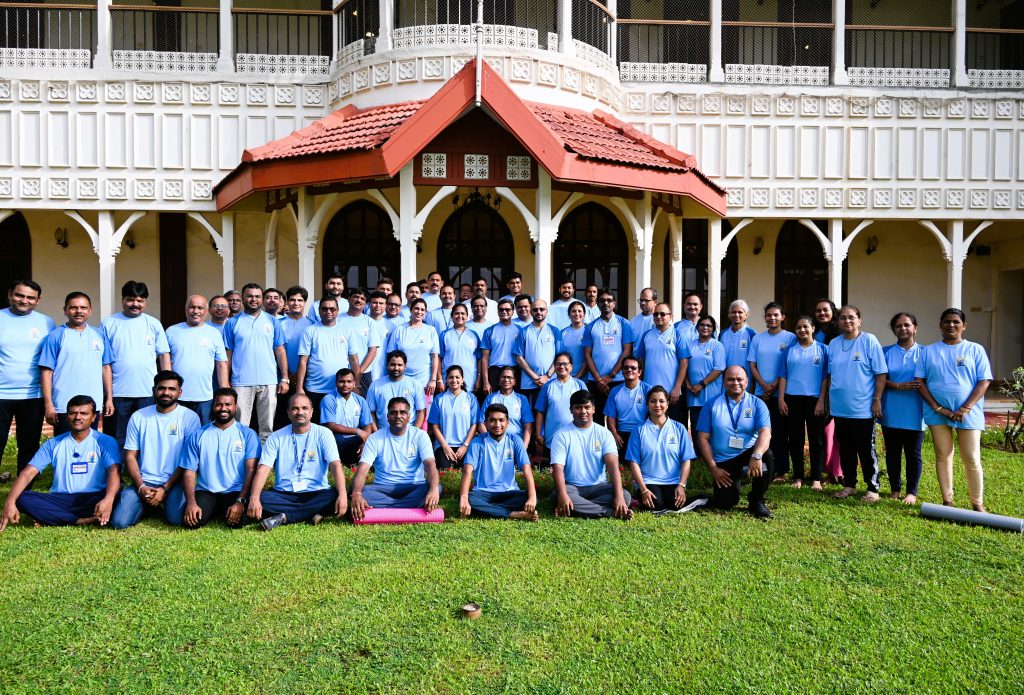
The fifth National Seminar on "Peaceful Uses of Atomic Energy" for science teachers, was held during September 22 to 25, 1999 in collaboration between DAE and the United Schools International (USI), New Delhi.

The seminar was aimed at enhancing the awareness of the audience, by elucidating how nuclear energy was being harnessed for several peaceful applications. Experts from DAE's organisations addressed the teachers. The lectures were followed by video film shows. Visits to Nuclear Science Centre and the Sita Ram Bhartiya Institute of Science Research which uses radioisotopes for diagnosis and treatment of cancer, were also organised.

As part of the seminar, the teachers held discussions, submitted reports and spoke on their role in creating awareness on peaceful uses of atomic energy and the tools they would adopt for the purpose.

The participating teachers found the interaction very useful. The participants unanimously expressed, that the Department should organise more such seminars.

Thirty-five science teachers had participated in the seminar.

sempart.jpg (25445 bytes)

Participants of the Seminar


Chairman, AEC will be honoured with Nayudamma Award

Dr. R Chidambaram, Chairman, Atomic Energy Commission has been selected for the prestigious Dr. Y. Nayudamma Memorial Award for the year 1999 for his contributions to the Indian nuclear programme. The Y. Nayudamma Memorial Award was instituted in 1986 in the memory of the scientist and internationally renowned leather technologist Dr. Y. Nayudamma. The Award will be presented to Dr. Chidambaram on November 26.


Sausheelya

Sausheelya, a society formed by the Department of Atomic Energy (DAE) has been rendering dedicated service in the field of educating mentally handicapped dependents of the employees of the Department.

At present the activities of Sausheelya are limited to Mumbai at Anushaktinagar where the Sausheelya Special School imparts education and training to mentally retarded children. Guidance is given on special skills and behaviour modification. Job oriented activities such as preparation of envelopes, leaf cups, sewing, screen printing, needle work etc. are carried out at the school.

The Society is managed by a Governing Council consistings of representatives from various units of DAE.

saushel.jpg (26590 bytes)

Sausheelya Students: Developing reasoning to meet complexities of life, and (below) in colour of creativity


JOURNALISTS' WORKSHOP

At the instance of the School of Journalism and Communication of the National Union of Journalists (India), New Delhi, the Department of Atomic Energy organised a 5-day workshop for working journalists during September 6 - 10, 1999 in Mumbai. Nine journalists from various parts of the country representing English and Hindi print media, participated in the Workshops.

A panel of DAE officers delivered comprehensive lectures covering subjects such as Nuclear Power generation, Design & Development in research reactors, Front End of nuclear fuel cycle and Materials for Nuclear industry, Fast Breeder Reactor, Application of Radioisotopes in Medicine, Agriculture and Industry, Safety and Environmental aspects, Waste Management, etc. The topics were selected keeping in view the issues that are of interest to the journalists. Apart from these lectures, visits to connected facilities at BARC; Tarapur Atomic Power Station and the BRIT were organized to give the feel and flavour of the research environment.

Dr. R. Chidambaram, Chairman, AEC; Dr. Anil Kakodkar, Director, BARC and Shri Y.S.R. Prasad, Chairman & Managing Director, NPC, discussed various aspects of the Nuclear Programmes of the Department with the participants of the Workshop.

During the last two years, this is the fourth Workshop organised by the Department for the benefit of the working journalists. The experience gained in the earlier workshops was of immense help in making this event focussed toward the needs of the participants. The feed back from the participants indicated that such workshops provide them an opportunity to become more familiar with the issues that concern public, clarify doubts and get a comprehensive understanding of important issues like safety and waste management.

- A.M.

journ.jpg (24573 bytes)

Journalists' Workshop

DAE Exhibition on Nuclear Science and Technology

A five day exhibition on nuclear science and technology, hosted by the Bangalore University, was held at Bangalore during October4-8, 1999. The exhibition inaugurated by Dr. K. Sidappa, Vice Chancellor, Bangalore University, attracted 5000 visitors.

The exhibits included panels on the activities of DAE, some models and radiation processed food/spice samples. A brief section on Pokhran-2 was one of the highlights of the exhibition. Multimedia presentations and video film shows on atomic energy formed a part of the exhibition. A quiz contest on nuclear science and technology was also held.

exhib.jpg (23604 bytes)

DAE Exhibition on Nuclear Science and Technology


Published by: Head Publications Division, Department of Atomic Energy, CSM Marg, Mumbai- 400 001

email: hpd@dae.gov.in