





|
One Reactor Unit of Rajasthan Atomic Power Project-3&4 attains criticality
![]() |
"It is a matter of pride that this fully indigenous 220 MWe heavy water reactor has been built to meet the latest safety standards and has state-of-the-art technology, including a fully computerised control system. The Unit will provide much needed electricity to the northern grid.... The start-up of this Unit is an important achievement in our endeavour towards self-reliance in modern technology. I congratulate the staff of the Rajasthan Project and the Nuclear Power Corporation of India Limited as well as the Department of Atomic Energy as a whole, for this achievement."
The Chairman, Atomic Energy Commission Dr. R. Chidambaram expressed
his happiness over the successful criticality of RAPP-3. He said, "Rawatbhata
has a special place in our nuclear programme - our first PHWR, our first
successful enmasse coolant channels replacement and now the commissioning
of the state-of-the-art PHWR ."
Message from Dr. Y. S. R. Prasad, Chairman and Managing Director, Nuclear Power Corporation of India Limited (NPCIL), reads : "This is the second nuclear power unit becoming operational within a short span of about three months. Nuclear Power is an important and inevitable source of energy not only to meet the growing energy demand of the country but also for long-term energy security. The commissioning of the unit is an important step in this direction."
The other unit of the Rajasthan Atomic Power Project (RAPP-4) is scheduled to achieve criticality later this year. The Rajasthan site already has two atomic power reactors (RAPS 1&2), which are under operation. The Unit-2 was recently refurbished after enmasse coolant channel replacement and safety up-gradation. With the criticality of RAPP-3, Rajasthan Atomic power Station achieves the distinction of being the largest nuclear park in the country.
The plant based on indigenous resources - design, construction and manufacturing including nuclear materials, uses state-of-the-art technology on par with anywhere in the world. It will use indigenously produced "natural uranium" as fuel and indigenously produced heavy water as moderator and coolant.
RAPP-3 design meets all the requirements laid down in the revised safety
standards. Safety features based on defence-in-depth , redundancy, diversity
and ‘fail-safe’ philosophy have been used at RAPP-3. Besides, effects of
external events have also been taken into consideration in the design of
the plant.
DO WE NEED FAST BREEDER REACTORS ?
Placid Rodriguez
This issue of Nuclear India focuses on the status of Fast Breeder Reactor Technology in India. Shri S.B. Bhoje in his article ‘FBR Technology’ has outlined the readiness of IGCAR to start construction of Prototype Fast Breeder Reactor PFBR in the financial year 2001-2002. Shri R.D. Kale has discussed briefly the activities carried out in IGCAR related to sodium technology and engineering development during the last twenty five years. The various aspects of fuel and materials development for PFBR are discussed in the article by Dr.Baldev Raj and Dr. T.P.S. Gill*. Dr. S.M.Lee provides a perspective on Fast Breeder Reactor Safety*. In my short article I want to emphasise why India needs Fast Breeder Reactors now and why the rest of the world will need them very soon. But, before doing this let me briefly highlight our achievements with Fast Breeder Test Reactor (FBTR).Director, IGCAR
FBTR has fulfilled all technology objectives with small carbide core
There was a time when many have dismissed FBTR away as a failure. We have had problems soon after its first criticality in 1985 with a major set back (the fuel handling incident) and frequent shut-downs caused by spurious signals from the neutronic channels. All these problems were overcome with grit and determination, and since 1992 FBTR has crossed many milestones from "valving" in steam generators and power increases to 1 MW , 4 MW , 8 MW, 10 MW and 12 MW the highest power possible with the small core. Today we can proudly claim that FBTR has fulfilled all the technology objectives with the small carbide core (Table-1). A special mention must be made of the fact that the unique plutonium-uranium (Pu-U) Monocarbide Mark-1 fuel (70% PuC- 30% UC) chosen with an initial target burnup 25,000 MWd/t, today has crossed the revised target burnup of 50,000 MWd/t (-5.5 atom %) burnup and the current revised target burnup is 65,000 MWd/t.
India needs PFBR today
The success of FBTR and the design, materials, manufacturing, and engineering development carried out in parallel over the years are culminating in our readiness to start construction of PFBR in the year 2001.
A question that is often asked is whether India needs the fast breeder reactors, particularly when other countries such as US, UK and Germany have abandoned this technology? I have always pointed out while answering this question, that the countries mentioned are saturated with energy generation, with per capita electricity consumption as high as 10,000 units per year against our meagre 350 units. In all these countries interest in fast breeders was given an impetus with the Middle East oil crisis in the seventies when both oil prices and prices of uranium increased sevenfolds. But the scenario has changed. Uranium prices are back to old levels. North Sea oil has become a new source in Europe. In the US new gas sources have been discovered. Germany has new gas pipeline from Russia. So they have no need to recycle plutonium in the fast breeder. There is also the fear of proliferation because FBR produces more plutonium than it consumes. And plutonium is a dual-use material used in nuclear weapons as well as fuel for fast breeders. But with a fast breeder programme like ours, one can use the excess plutonium for new power stations. That is why we talk about ‘Doubling Time’, the time required to build one more reactor using the excess fuel produced from an operating FBR.
|
|
|
|
January 93 |
|
December 93 |
|
June 94 |
|
June 96 |
|
April 97 |
|
July 97 |
|
April 97 |
|
November 99 |
The World will need FBRs soon
While India needs the fast breeder today, the rest of the world will need it tomorrow. Many careful studies and informed sources have concluded that nuclear power and fast breeders in particular will make a come back.
A recent OECD study has examined three scenarios for the change in the
present nuclear share in the world energy production in the next hundred
years (Table-2 and Fig.3.). The most optimistic scenario-I projects continued
nuclear growth and a total nuclear installed capacity of 1120 GWe in 2050
for the whole world, which means a production of about 1 TWe (terawatt)
per year. If scenario-II which is the facing out of nuclear power stations,
is to take place, it would mean that by the year 2050, the carbon-dioxide
production from fossil power plants would double. The environmental consequences
like breaking of the ozone layer, green house effect and global warming
are serious concerns. This is the raison d’etre for scenario-III that nuclear
energy has to stage a come back. Fig-4 shows world fixed energy resources
in TWy (terawatt year) and it is clear that a total nuclear generation
of 1 TWy per year can be sustained through open fuel cycle for only 44
years. The liquid metal cooled fast breeder reactor operating on the fuel
recycle route remains the only technology currently available that can
provide energy to meet the demands that are likely to arise by 2050 and
beyond in the whole world. In other words, in the absence of any other
new technology, fast breeders will ultimately become relevant and necessary
for the whole world.
Fig 1. Utilisation of Uranium as a function of conversional breeding ratio
(From Fast Breeders, Report of INFCE Working Group5, IAEA, Vienna, 1980
Fig2. Comparison of different energy resources for electricity generation in India
Before closing, I would like to quote two statements attributed to the great Enrico Fermi . One version is due to Bethe who recalled a lecture that Fermi gave at Los Alamos just after the second world war in which he said that " a country that learns to build breeder reactor would have solved its energy problems for ever". In another version Fermi’s statement reads : "the country which first develops a breeder reactor will have a great competitive advantage in Atomic Energy". Today in the world scenario many countries have realised--India and Japan are among them (France also was and yet may come back to this thinking)--that Fast Breeder technology is the route not only to meet the energy needs but also for energy independence of a nation. Also the question is not whether the world needs fast breeder reactors or not, but when ? It is inevitable that as the coal resources in the world get depleted and the environmental concern for CO2 emission becomes compelling, there will be a return of the nuclear power and as the uranium prices then is bound to go up, one day not very soon into the twenty first century, FBRs would become a necessity for the whole world. By mastering this technology, we will therefore not only be solving our energy problems but also be gaining a competitive advantage.
| Nuclear Variant | 2000 | 2010 | 2020 | 2030 | 2040 | 2050 |
| I Continued-nuclear growth | 367 | 453 | 569 | 720 | 905 | 1120 |
| II Phase-out | 360 | 354 | 257 | 54 | 2 | 0 |
| III Stagnation followed by revival | 355 | 259 | 54 | 163 | 466 | 1120 |
Fig 3 : World nuclear electricity generation projections. (From Nuclear Power and Climate Change, Report of Nuclear Energy Agency, OECD, 1997) |
|
Fig 4 : World fixed energy resources (TWy) (From Walter C.E. Int. Symp. On Nuclear Fuel Cycle and Reactor Strategies. Paper No. IAEA-SM-346/38p, IAEA, Vienna, 2-6 June, 1997) |
FAST BREEDER REACTOR TECHNOLOGY
S.B. Bhoje
Director, Reactor Group, IGCAR
Introduction
As a part of development of FBR in India, a 40 MWt Fast Breeder Test Reactor (FBTR) was commissioned in Oct 1985. Though the design of FBTR was partly obtained from France, the construction was essentially an indigenous effort -- the fuel, the sodium coolant and the components. Experience with unique new carbide fuel and sodium systems including steam generator has been very good. Design of 500 MWe Prototype Fast Breeder Reactor (PFBR) has been undertaken at IGCAR, as next logical step towards commercial deployment of FBR. PFBR is the forerunner of a series of reactors that are to follow. In the following paragraphs, a brief description of PFBR and the associated R&D program with its evolution are presented.
Main Options
Sodium coolant and pool type concept are chosen for the primary circuit of PFBR. Power is fixed as 500 MWe. The well proven mixed oxide fuel is chosen for PFBR. The core inlet/outlet temperatures are chosen as 670 K / 820 K, based on detailed thermal hydraulic and structural mechanic studies. The materials of construction are 20 % CW D9 for fuel clad and wrapper (low irradiation swelling and high creep rupture strength), SS 316 LN for sodium circuit components (corrosion resistance and high temperature strength), 9 Cr - 1 Mo for steam generator (high strength and freedom from stress corrosion cracking) and A 48 P2 for top shield (high impact strength). The systematic design methodology adopted (that is consistent with concurrent worldwide FBR technology) has resulted in compact, simplified layout with 2 primary sodium pumps and 2 secondary loops. The reactor site is Kalpakkam and is designed for a life of 45 y.
Reactor Assembly
The reactor assembly consists of core, grid plate, core support structure (CSS), main vessel, safety vessel, inner vessel, top shields and absorber rod drive mechanisms. The core is homogeneous with two enrichment zones having radial and axial blankets. The target burn-up is 100 GWd/t with a maximum linear power of 450 W/cm. Adequate diversity and redundancy for reactor shut down are provided in the form of two independent, fast acting, diverse shutdown systems. The subassemblies (SA) are supported on a grid plate (GP). The GP forms the inlet plenum for distributing coolant flow from the pumps to the core. It is supported on core support structure (CSS). The CSS is a box type orthogonally stiffened structure designed for effective use of structural material to withstand various loads. It also supports the in-vessel transfer post through which SA are handled. The CSS is supported on the main vessel, which is closed at the top by top shields and serves as boundary against release of radioactivity under operating and accident conditions. It holds 1150 t of primary sodium, blanketed by argon cover gas. Its shape is designed to enhance the buckling resistance and is suspended by a cylindrical shell supported on the reactor vault. To minimise thermal aging and creep, it is cooled by sodium. A safety vessel surrounds the main vessel with a nominal gap of 300 mm. This gap permits in-service inspection of the vessels and ensures that the sodium level in the hot pool does not fall below intermediate heat exchanger (IHX) inlet windows, in the unlikely event of main vessel leak. The SS thermal insulation fixed on its outer surface reduces heat flux to the reactor vault. The safety vessel is supported on reactor vault. Inner vessel separates the sodium in the hot and cold pools, and is supported on the grid plate. The shape of the inner vessel is arrived at based on thermal- hydraulic and structural considerations. Top shield consists of roof slab, large rotatable plug (LRP), small rotatable plug (SRP) and control plug (CP). It provides biological and thermal shielding in the upper axial direction of the reactor. The roof slab supports the LRP, PSP, IHX and heat exchangers of decay heat removal system. The roof slab, LRP and SRP are of box type structures made of 30 mm thick carbon steel plates. Concrete of density 3,000 kg/m3 is used as the shielding material. Air is used for cooling and inflatable seals are used for sealing. CP provides support for the absorber rod drive mechanisms (ARDM), core outlet temperature monitoring thermocouple tubes (210 nos.) and failed fuel location modules.
Heat Transport System
The heat transport system consists of primary sodium circuit, secondary sodium circuit and steam-water system. From the considerations of reduced capital cost, construction schedule and outage time due to failure of components, a 2 loop arrangement is adopted for the secondary sodium circuit together with 2 primary sodium pumps (PSP) for the primary sodium circuit. There are 2 Intermediate Heat Exchangers (IHXs), 1 secondary sodium pump and 4 steam generators (SG) per loop. The 2 IHX/PSP is selected based on the existing pool type reactor.
Component Handling System
The core subassemblies (fuel, blanket, absorber and shielding SA) are handled with reactor in shutdown condition (473 K). Refueling is done after 185 efpd. The handling system has been divided into two parts i.e. in-vessel handling and ex- vessel handling. The spent fuel SA are stored inside the main vessel for 8 months and then shifted to spent fuel storage bay, which is a water pool. Handling of fresh SA consists of receipt from transport flask, flow test for any gross blockage and storage in fresh SA transfer chamber. They are then transferred to the reactor using cell transfer machine and inclined fuel transfer machine. Handling of PSP, IHX, ARDM are done by leak-tight shielded flasks. Storage pits, decontamination facility and dismantling facility are provided for these radioactive components in the reactor containment building (RCB).
Balance of Plant
Steam-water system adopted is very similar to that of conventional thermal power stations of same capacity. A transmission voltage of 220 kV with indoor switchyard and conventional switch gear equipment is selected. The plant will be connected to the southern regional grid to export power generated and to provide off-site power supply to the station auxiliaries. Emergency power supply is provided by 4 DG sets, UPS (Class II) and 48 V DC (Class I) supplies. Auxiliary systems such as raw water system, demineralised water plant, service water system, fire protection system, A/C and ventilation system, nitrogen supply system, argon supply system and compressed air system are provided to suit the requirements of the reactor.
Plant Layout
The nuclear island has a common base raft for structurally inter connected
buildings. Condenser is cooled by sea water and pump house is located off
shore with pipes on jetty. The plant layout provides back-up control room,
physical separation of 2 SG buildings and 4 safety grade decay heat removal
(SGDHR) circuits and location of turbine building with respect to safety
related items.
Various Failure Modes considered in the design of PFBR |
Instrumentation and Control
Neutron flux is monitored by fission chambers located in hot sodium above the core. SA outlet sodium temperatures are monitored to detect SA fault events (e.g. under cooling). Failed fuel detection is done by monitoring cover gas fission product activity and delayed neutrons in the primary coolant. Provision is made for continuous monitoring of SG tube integrity by detection of hydrogen in sodium, hydrogen in argon of the surge tank, argon pressure of surge tank etc. For detection of sodium leaks, wire type leak detectors, spark plug leak detectors, sodium ionisation detectors and mutual inductance type level probes are provided. Reactor is tripped by dropping the absorber rods once safety parameters such as neutron flux, temperatures, flows cross their threshold values. The power is regulated manually.
Safety
FBR systems are designed with the defence-in-depth approach having redundancy, diversity and independence. The safety measures provided are two diverse reactor shutdown systems, two decay heat removal systems, a core catcher and RCB. Control and safety rod system is used for reactivity compensation, power control and shutdown, while diverse safety rod system is used only for shutdown. Generally, the decay heat is removed by normal heat transport path through SG. In case of loss of off-site power or non-availability of secondary or steam-water circuit, the decay heat is removed via a class I safety grade passive direct reactor cooling system. It consists of four independent circuits of 8 MWt capacity each having a sodium to sodium heat exchanger dipped in reactor hot pool and a sodium to air heat exchanger. A core catcher is provided to collect the molten fuel, suitably disperse it and ensure long term cooling in case of melt down of seven SA. With a similar defense in depth approach, an RCB is provided for anticipated transients without scram (ATWS) which are of event frequency <10-6 per reactor year.
Detailed Analysis and Design Studies
For design of PFBR components, the French RCC-MR code is followed, backed by special procedures not covered by the code. Apart from the codal limits, certain functional limits are to be respected on deflection and slopes for core SA, GP, CSS and CP from the considerations of reactor scramability and reactivity addition. The high thermal stresses in conjunction with high temperature are responsible for failure modes such as creep, fatigue and ratcheting. The design codes call for detailed inelastic analysis which requires constitutive models having ability to simulate creep, plasticity, creep-plasticity interaction, cyclic hardening, strain memory and thermal aging. The ‘23-parameter Chaboche model’ and ‘13-parameter reduced Chaboche model’ are utilised. To have a better thermomechanical behaviour and also from economic considerations, the component wall thicknesses are kept as low as possible, since the basic thickness for the pressure loading is generally small. The high R/t ratio of components causes concerns over other failure modes, viz. buckling, seismic loading and fluid structure interaction effects. Large sodium mass in association with sodium free surfaces within thin closely spaced concentric vessels amplifies the severity of seismic events. Large heat transfer coefficient of sodium leads to convective resistance of the fluid and conductive resistance of the structures of comparable magnitudes, despite lower thickness of the structures. High level of temperature coupled with large temperature differences leads to significant buoyancy effects and radiative interaction among structures. These call for heat transfer analysis in coupled modes involving convection, conduction and radiation simultaneously. Various failure modes considered in the design of PFBR are summarised in Fig. 1. These complexities call for specialised analysis methods both in thermal-hydraulics and structural mechanics. For the purpose of theoretical analyses, many thermal-hydraulic and structural mechanic computer codes have been developed at IGCAR. A large experimental R&D programme has been launched to validate the computer codes and the design. At present, 40 experiments are in progress at various places in IGCAR, BARC and outside institutes.
The performance testing of various subsystems of absorber rod drive mechanisms viz electromagnets, seals, dashpot, gripper assembly etc. have been carried out. For the reliability testing of prototype control and safety rod drive mechanism, a sodium test rig has been built. Development of sodium resistant concrete is in progress at the centre.
FBR requires highly sophisticated and extensive analytical capabilities in core physics, radiation shielding, thermal-hydraulics, structural mechanics and safety. Such capabilities have been developed at IGCAR during the last decade.
Development of Manufacturing Technology
Several indigenous materials development programmes have been initiated.
For example, development of D9 material has been completed and sample clad
tubes have been manufactured successfully. The developmental activities
for 20%CW D9 material and fuel SA fabrication are in progress. Development
regarding manufacture of 8 m long 316 LN tubes for IHX has been completed
and 23 m long SG tubes of 9Cr-1Mo have been manufactured. Manufacturing
technology development program for key components was initiated with the
participation of Indian industries. The prototype control and safety rod
drive mechanism, diverse safety rod drive mechanism, transfer arm and inclined
fuel transfer machine, full sized sectors of components like main vessel,
inner vessel, roof slab have been manufactured. Providing infrastructure
requirements for the site such as site assembly shop, construction office,
levelling, roads is being started.
Present Status of PFBR
The detailed design of NSSS is nearing completion and is being reviewed
by the Atomic Energy Regulatory Board. Appointment of consultants for balance
of plant design and preparation of environmental impact assessment report
are under progress. It is planned to start construction of PFBR in April
2001 and the project is expected to be completed in 8 y. After successful
commissioning of PFBR, it is proposed to construct 4 x 500 MWe FBR at a
suitable site in a phased manner.
Sodium Technology & Engineering Development
R.D. Kale
Associate Director-EDG and Director TEAMG and ESG
IGCAR
Introduction
The sodium technology programme commenced at IGCAR, Kalpakkam way back in 1974 with the decision to set up the experimental FBTR which was to be cooled by liquid metal sodium, well known for its excellent heat transfer characteristics coupled with favourable nuclear properties. The programme initially focussed on safe handling of liquid sodium in pumped loops, reactor comp-onent tests, sodium instrumentation and last but not the least in preparing 150 tonnes of sodium coolant of reactor grade from commercially available quality.
By 1985 when FBTR attained criticality the experimental sodium technology and engineering programme had matured enough to tackle future developments in support of the 500 MWe Prototype Fast Breeder Reactor (PFBR), the conceptual design of which had by then taken shape. Several small and medium sodium loops were in operation for studies in liquid metal corrosion, liquid metal heat transfer, and calibration of certain reactor instrumentation.
![]() Hydraulic Prototype of Primary Pump on Test Bed : Delivery Valve being throttled |
Major Test Facilities
From the late eightees through the nineties, several test facilities have been added to meet the requirements of PFBR engineering development. In addition, facilities/models have been set up in other national laboratories/industries to assist the inhouse work. These include subassembly hydraulic test rigs, 1/24 and 1/15 scale models in perspex of the primary circuit, test facilities for studying heat exchanger hydraulics and flow induced vibration behaviour, facility for development of dash pot and seals for reactor control mechanism, primary pump model test facility and rotor dynamics rig and a large sodium test facility (LCTR) to study heat transfer in reactor roof slab, and test large components in sodium.
Highlights of Important Works
The heat transfer from free sodium surface in the reactor hot pool to the rotatable plug in the roof slab assumes an important experimental determination. A 1:1 simulation of vertical annuli exposed to reactor cover gas/sodium below is achieved in a cylindrical test vessel 8.8 m tall x 3.0 m dia through which liquid sodium is circulated and the temperature gradients from sodium surface to rotatable plug maintained as in the reactor. A shield/plug cooling system with air maintains the desired temperature conditions. A distribution data acquisition and control system monitors the temperatures sensed by 200 Cr-Al thermocouples.
In another important component development area, the primary sodium pump (7600 m3/h @ 80 m head, 2100 kW BHP) hydraulics was developed on a 1/3.4 scale model to achieve a "cavitation free" (zero bubble condition) at the operating net positive suction head (NPSH) of 13.5 m. The pump performance was also verified on a fullscale hydraulic prototype simulating the exact inlet geometry and good agreement was obtained on NPSH3% value and another important parameter such as bowl efficiency of better than 85%.
In a companion development work, electromagnetic pumps with NO moving part have been developed for circulating small sodium flows from 5 m3/h to 20 m3/h @ 4 bar pressure in two pump versions, annular and flat linear induction pumps (ALIP and FLIP).
An important design verification is related to the hydraulic performance of the fuel subassembly consisting of 217 cylindrical pins containing dummy fuel pellets. On the one hand a full scale subassembly was tested in the hydraulic rig at a water temperature of 70°C, simulating Reynolds number in actual sodium flow in the reactor and thus enabling exact prediction of pressure loss in the operating conditions. On the other hand a truncated small 19-pin bundle was tested under simulated hydraulic conditions to understand the behaviour of pin vibrations vis-a-vis the pitch of the spacer wire separating each pin from its neighbours. The pin lattice and length were also chosen to reproduce all flow channels and to obtain fully developed flow. FIV measurements were made on two centrally located pins using strain gauges.
Monitoring of process parameters such as flow, level or temperature
in a somewhat hostile liquid sodium environment at high temperature have
always presented great challenges to the instrumentation specialists. However,
thanks to excellent electrical conductivity of sodium, most of these parameters
can be measured making use of suitably developed electromagnetic devices
in addition to metal sheathed thermocouples. A variety of sodium instrumentation
has been developed inhouse and technology for two types of sensors viz.
the magnetic flowmeters and sodium level probes based on resistance change
or inductance change has been transferred to the industry. A novel imaging
technique using ultrasound has been also developed to scan and image submerged
objects in high temperature sodium at 250°C. An ultrasound based spinning-scanner
mounted with sodium immersible transducer has been successfully deployed
in FBTR reactor vessel itself to scan above core space for any protruding
subassembly and to image control rod mechanism parts and other submerged
structures.
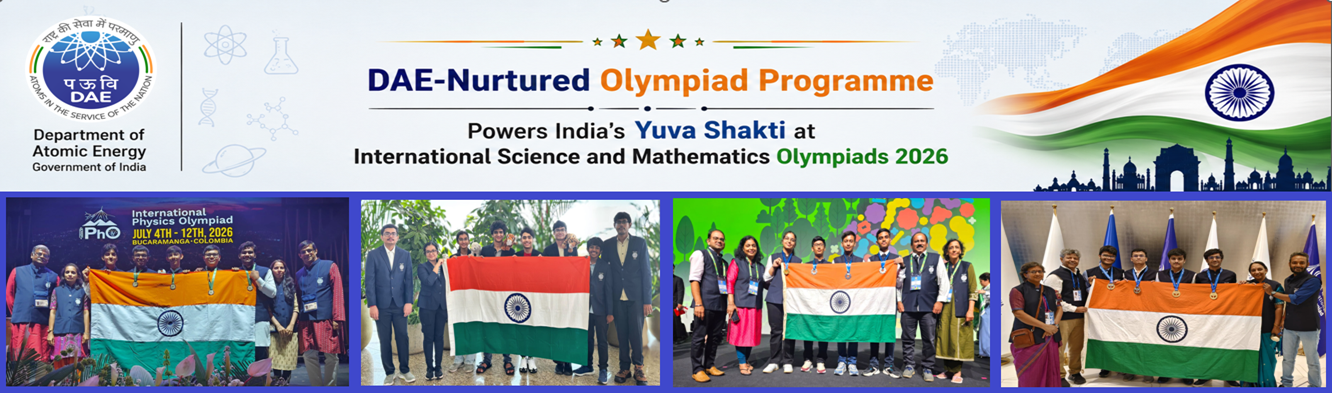
OLYMPIAD PROGRAMME IN BASIC SCIENCE
Arvind Kumar
Homi Bhabha Centre for Science Education
A comprehensive olympiad programme in physics, chemistry and biology leading to participation in International Olympiads has been initiated in the country. The programme is supported bv the Department of Atomic Energy (DAE), Department of Science and Technology (DST) and Ministry of Human Resource Development (MHRD). The responsibility of implementing the programme has been primarily entrusted to the Homi Bhabha Centre for Science Education (HBCSE) a National Centre of TIFR, at Mumbai. HBCSE collaborates with the Indian Association of Physics Teachers (IAPT) in carrying out the olympiad activity. DAE has constituted an Integrated National Steering Committee for coordinating the olympiad programme in the three subjects and has appointed Director, HBCSE as the National Coordinator of the programme.India has been participating in the International Mathematics Olympiad since 1989 and the Indian teams have been doing well at this prestigious annual event. The Mathematics Olympiad activity is organized under the aegis of the National Board of Higher Mathematics (DAE). The mathematics programme consists of three stages. First, in December each year, the Regional Mathematics Olympiad is held at about 20 centres in the country. All school students of Class XI (and no higher) are eligible to appear for the Regional Mathematics Olympiad. The selected students from each region then appear for the Indian National Mathematics Olympiad which is held in February each year at the centres of different regions. The top 30-35 students from all over the country are invited to a month-long Training Camp at the HBCSE in May each year. A faculty drawn from different institutions in the country trains the students. Selected students from the previous year’s batch also attend the camp. A team of six students at the end of the camp represents the country at the International Mathematics Olympiad (1MO). India hosted the International Mathematics Olympiad-1996 in Mumbai.
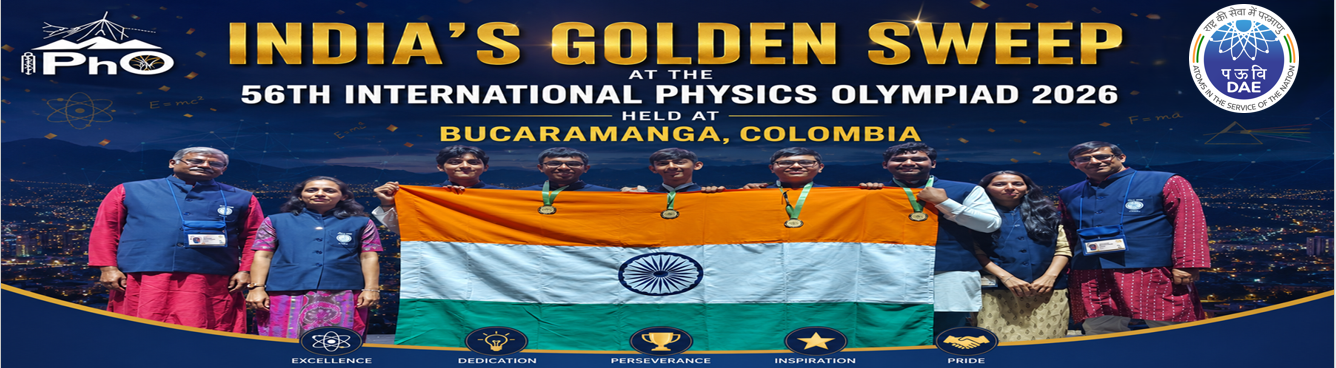
Participation in International Physics Olympiad (IPhO) began when the first Indian team went to the IPhO-1998 held in Reykjavik, Iceland in July 1998. Encouraged by the rather good maiden performance in physics, HBCSE took initiative to extend the programme to chemistry and biology. The initiative got full-fledged support from DST DAE and MHRD. HBCSE organized for the first time national chemistry and biology olympiads in 1999 at different centres in the country and held training camps for selected students. India sent its first team to International Chemistry Olympiad (IChO) held in Bangkok, Thailand in July 1999. Participation in International Biology Olympiad begins from the year 2000.
As in mathematics, three rounds of selection are organized to arrive at the final team. In the first stage, a large number of students appear for the National Standard Examination in Physics organized by IAPT. From this year, the equivalent examinations in chemistry and biology were organized jointly by IAPT and HBCSE. Selected students, about 200 in each subject, then appear for the National Olympiads organized jointly by HBCSE and IAPT. About 35 students selected in each subject undergo a few weeks of intensive training at HBCSE. Special olympiad training laboratories are under continual development at the Centre, and several scientists are invited from different institutions to be among the resource persons of the camp. At the end of the training camps, teams of 4 to 5 students are selected in physics, chemistry and biology and deputed to represent the country at the prestigious international events.
At the IMO-99 held in Bucharest, Romania the Indian team received three silver and three bronze medals. At the LPhO 99 held in Padua. Italy, the Indian team received four silver and one bronze medals. Additionally, one student received a special prize for ‘Best Solution to Theoretical Problem-2’’ India’s maiden performance at IChO 99 was also good. The four-member team received 2 silver and 2 bronze medals. Thus every team member in all the three olympiads received a medal. Overall, the Indian Olympiad performance has been good but still considerable more work is needed to bring the country in the category of ‘top olympiad performers’ in the world.
| A common trend observed amongst the top students is that after their 12th standard, normally they do not pursue studies in the basic sciences like physics and chemistry. DAE inducts scientists through BARC Training School. To induct bright students to the Training School, it is necessary to motivate students, such as those who qualify for medals in the International olympiads in physics and chemistry, to pursue studies in basic sciences. In view of this it has been decided that such bright students, should they purse studies in physics or chemistry upto M.Sc. level and also maintain high standards (at least above 65% in undergraduate and graduate levels), will be offered direct entry to the BARC Training School (one year orientation course) subject to only medical examination. |
The integrated olympiad programme is a most significant initiative of the country to promote excellence in basic sciences. The olympiads have already generated tremendous enthusiasm among the highly meritorious young students in different parts of the country. As a major incentive to pursue career in science, BARC has decided to offer direct entry into BARC Training School to all the students selected as members of the Indian teams for International Olympiads in physics and chemistry. DST has recently announced attractive scholarships to olympiad students for pursuing advanced studies and research in their disciplines. Similar scholarships have been announced for mathematics and physics by ISRO also.Information on the Olympiad Programmes can be obtained from :
- Dean,
- Homi Bhabha Centre for Science
- Education (TIFR), V.N. Purav Marg.
- Mankhurd, Mumbai - 400 088.
- Tel : 022-5562132, Fax: 022-5566803.
- e-mail: hcp@hbcse.tifr.res.in.
|
An agreement for Technology Transfer of Clinical
Dosimeter has been signed between BARC and M/s Nucleonix Systems Pvt. Ltd.,
Hyderabad on November 17,1999 by the Director, Technical Coordination and
International Relations Group and Reactors Projects Groups, and the Managing
Director of M/s Nucleonix.
Clinical Dosimeter type RD-4B is a compact, battery operated instrument. It is designed to measure exposure rates due to gamma radiation upto 250 R/h. It is used for measurement of exposure rates in the bladder and rectum of patients undergoing treatment with Caesium or Cobalt implants for carcinoma of uterine cervix. The unit can also be used for exposure rates measurement in other body cavities. The instrument consists of a miniature ionization chamber coupled to a stable D.C. amplifier by a 2-1/2 meter long triaxial cable. The D.C. amplifier is a ultra-low bias current, low drift FET input operational amplifier which drives digital display. The technology has been developed by the Radiation Standards and Instrumentation Division of BARC. This instrument has been supplied to a few hospitals by BARC. |
Bhabha Atomic Research Centre (BARC) accredited M/s Renentech Laboratories Pvt. Ltd., Mumbai, the first laboratory in private sector, to provide Personnel Monitoring Service (PMS) to radiation workers in India.
By regulations, radiation workers are to be covered by individual monitoring. For this a personnel monitoring badge capable of recording the quantity of radiation encountered, is worn on the body of an individual while working with the radiation sources or radiation generating equipment. At present about 40,000 radiation workers are covered by PMS. With the spread in the use of radiations in health care and industry, the number of radiation workers is increasing. This will considerably increase the load on PMS facility of BARC and other monitoring units. As by now the equipment necessary for the service has become commercially available with the transfer of technology from BARC and the number of trained professional have become available through the training provided by the Department. Thus personnel monitoring by agencies, other than BARC, became feasible. It was therefore decided to accredit laboratories having sufficient infrastructure and expertise.
A document titled, "Accreditation Requisite Booklet (ARB)" describing the objectives, procedures, technical details and financial implications was prepared and in 1998 an announcement about the intention of granting accreditation was made through advertisements in all leading news papers in India. Amongst the applicants, M/s Renentech Laboratories Pvt. Ltd., was found most promising. After series of tests and evaluations, accreditation was granted on October 7, 1999, following which, PMS agreement was signed on November 17,1999. This laboratory will handle the load of 60,000 services/year equivalent to monitoring ~12000 radiation workers a year. The laboratory will strictly operate under the supervision of BARC for QC & QA. With experience of this exercise, the accreditation will be considered also for other Indian laboratories, in future.