


International Atomic Energy Agency
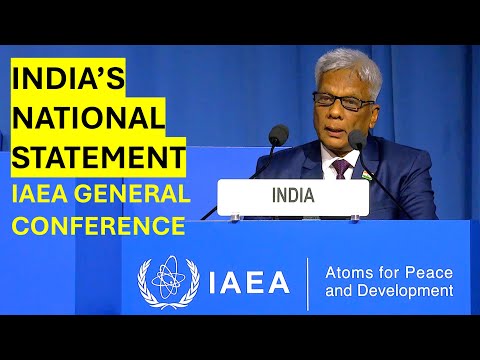
51st General Conference, Vienna , 19th September  2007
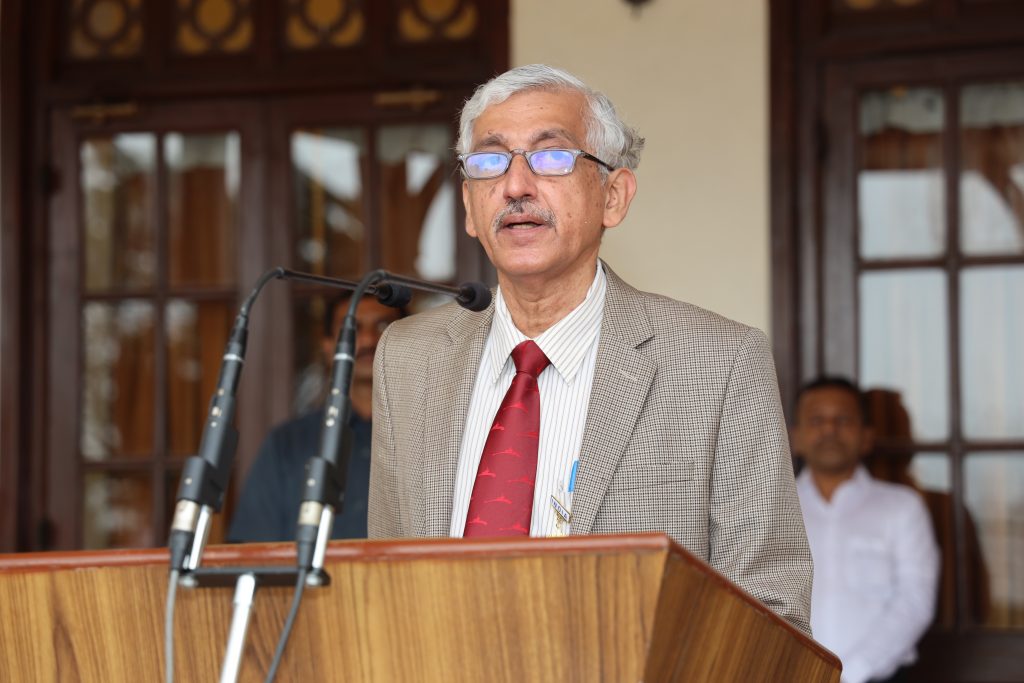
Statement by Dr. Anil Kakodkar,
Chairman, Atomic Energy Commission and Leader of the Indian Delegation


 Mr. President,


          Let me first of all congratulate you on behalf of my Government and on my own behalf, on your election as President of the 51st General Conference.  I am sure, under your able Presidentship and with the support of your team and the Secretariat of the Agency;  this General Conference will be able to accomplish the tasks before it.

           I also take this opportunity to welcome the entry of Kingdom of Bahrain , Republic of Burundi , Nepal , Republic of Congo and Republic of Cape Verde to the membership of the International Atomic Energy Agency (IAEA).

Over the past half century, the growth of the Agency and India ’s nuclear energy programmes have evolved side by side. The Agency has contributed immensely to harness the benefits of nuclear energy and its applications for all mankind. India , home to a sixth of global population with a sound and time-tested philosophy of life, too has evolved its own nuclear technological capability, realised on the basis of self-reliant domestic development for the welfare of its people.  Our Bhabha Atomic Research Centre Training School which has provided almost the entire human resource for our nuclear programme has also completed fifty glorious years and our Prime Minister was with us only a fortnight ago for the graduation function of its 50th batch.

         On the occasion of its 50th anniversary, it is gratifying to recognise the unique place that the IAEA has within the UN system. The prestige, credibility and authority of IAEA in this new century rests to a very good measure on the consistent good work done by its Secretariat under the wise  leadership of Dr El Baradei especially for the past critical decade. My delegation would like to pay handsome tributes to the Director General and the dedicated staff  of IAEA for their professionalism, impartiality and core competence in serving the Member States in accordance with the Statute of the Agency. IAEA’s achievements in the past half century have much to contribute to rekindled hopes for a peaceful atom in coming years.

 Mr. President,

The world today is at the threshold of a paradigm shift.  There is greater awareness today than ever before about the serious consequences to  humanity as a whole arising out of the threat to global climate which seems to be at the cliff edge.  This situation has come about as a result of unmindful and unsustainable use of fossil energy by a small fraction of world population in industrially advanced societies.  On the other hand, a larger part of world population is now on a rapid economic development path.  It would require enormous amounts of energy resources to bridge the deficit between the emerging demand and current supply which is very low in the developing world even compared to global average per capita energy consumption.  It seems impossible to sustain a tension-free society with 20 or 30 times less per capita energy access in the current interdependent world so closely connected through modern-day communications.  It is estimated that meeting development aspirations of these large populations which are now well capable of buying their necessities would raise serious energy sustainability issues and consequent escalation of fuel prices that would affect us all.  One needs to look at nuclear energy in this context.  Energy associated with processes involving the nucleus of an atom is several million-fold higher than the energy associated with processes that involve electrons that orbit around the nucleus.  The latter forms the basis of energy through burning of fossil fuels.  Thus, a kilogram of uranium can be a source of a million times more energy as compared to a kilogram of coal or a kilogram of hydrocarbons.  Non-emission of greenhouse gases that have threatened the global climate is also a feature of nuclear energy that is catching the imagination of even some of those who earlier opposed it.  As a matter of fact, nuclear energy released through fission or fusion of atomic nuclei and solar energy that we receive from the sun are the only two viable basic energy sources capable of meeting our long-term energy needs.  We also cannot escape the fact that the sun derives its energy from nuclear fusion.  There is, however, a serious fear of the unknown. Such concerns are natural and have been faced by humankind whenever there has   been   a paradigm shift in things around it.  Whether it is in learning to live with fire or advancing from horse carriages to locomotives and automobiles, man has gone through similar dilemmas.  But eventually, he has mastered the new technology and accessed its benefits, overcoming the fear of the unknown.  In the absence of such foresight and conviction, we could not have made progress.  In the case of nuclear energy we are, however, talking on an altogether different scale.  Given the population pressure and the need to provide a good quality of life to all, we must evolve ourselves as a society that can benefit from this high-intensity energy source without the risk of its misuse.

 Mr. President ,

India with its one billion plus aspiring population and one trillion dollar economy with steady 8% plus GNP growth requires enormous amounts of sustained and reliable energy supply.  It is estimated that India would need around 7000 TWh of electricity annually and an additional and larger quantum of primary energy to meet requirements of fossil fluid fuel replacement.  While accessing this huge energy supply is a major challenge, we are also fully conscious of the environmental impact of such growth in energy use particularly if it takes place in the business-as-usual mode.  In this context, I would like to draw your attention to what our Prime Minister said at the recent Heiligendamm meeting and I quote, “ India ’s GHG emissions are among the lowest in per-capita terms.  Moreover, being only around 4% of the world’s emissions, action by us will have a marginal effect on overall emissions.  Nonetheless, we recognize wholeheartedly our responsibilities as a developing country.  We wish to engage constructively and productively with the international community and to add our weight to global efforts to preserve and protect the environment.  We are determined that India ’s per-capita GHG emissions are not going to exceed those of developed countries even while pursuing policies of development and economic growth.  We must work together to find pragmatic, practical solutions, which are for the benefit of entire human kind”. unquote

 Mr. President ,

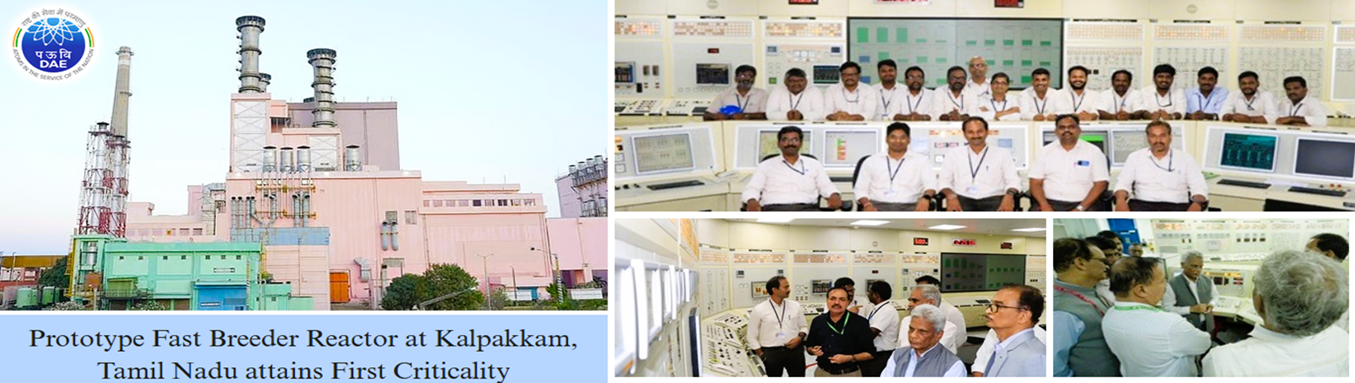
India has been pursuing its robust three stage nuclear programme designed to maximize the energy potential from its domestic uranium and thorium resources and contribute around 25% share of electricity generation in the country by the year 2050.  The objective is to realize the huge energy potential that is realizable from these nuclear energy resources without having to add to the global carbondioxide burden.  The programme is moving ahead steadily with the first stage consisting of indigenously developed Pressurised Heavy Water Reactors (PHWRs) well into a commercially successful programme.  The second stage has commenced with the construction of 500 MWe Prototype Fast Breeder Reactor (PFBR) which is now fairly advanced. The third stage is about to begin with the start of construction of a technology demonstrator, the 300 MWe Advanced Heavy Water Reactor (AHWR).  The three stages are being implemented sequentially to reach the goal of large scale thorium utilization and are linked through their respective fuel cycles which are also well underway.

           Kaiga-3 (a 220 MWe PHWR) which achieved its first criticality on 26th February, 2007 within 5 years from the first pour of concrete, was synchronized to the grid on 11th April, 2007 and started commercial operations on 6th May, 2007.  With completion of Kaiga-3, there are now 17 nuclear power reactors in operation, the total installed capacity being 4120 MWe.  The Indian nuclear power sector has achieved over 270 reactor years of safe, accident free operations.  Major Ageing Management activities including Enmasse Coolant Channel Replacement (EMCCR) were completed in NAPS-1 and the reactor is expected to come back on-line shortly.  With this, four PHWRs (RAPS-2, MAPS-1&2, NAPS-1) now have their coolant channels replaced.

           The first cycle of Peer-reviews of all the operating stations by WANO has been completed.  RAPP-5 unit has also undergone a Pre-Startup Peer Review by an expert team of WANO.  This was the second review of its kind in India ; after TAPP-3 which was reviewed last year.  The next Biennial General Meeting (BGM) of WANO will be hosted by India , in 2010 at New Delhi .

           Construction activities are underway in full swing at six other reactors – three PHWRs, two LWRs and a 500 MWe PFBR.  Of these, two reactors (RAPP-5 and Kaiga-4) would see start of fuel loading during the year.  On completion of the reactors currently under construction, there will be 23 reactors in operation with installed capacity of 7280 MWe.  The detailed design and engineering of the indigenous 700 MWe PHWR is progressing according to the set time schedule.  The Government has given in-principle approval for setting-up of 4x700 MWe PHWRs at two sites and 4x1000 MWe LWRs at another two sites in the country.  Establishment of a new Uranium mine and mill at Tummelepalle has also been approved by the Government.

           For accelerating the growth of the fast reactors in the country, development of metallic fuel, which would offer high breeding capabilities is being carried out on priority with the aim of its deployment around the year 2020.  The next four fast reactors after the PFBR, which are proposed to be commissioned by 2020 will however, continue to use oxide fuel. These future reactors will incorporate refinements in the design and construction, to achieve reduction in capital as well as operational costs, on the basis of experience with the PFBR. The objective is to bring down the unit energy cost substantially as compared to PFBR.  Enhancement of the burn-up of the fuel from the present target of 100 GWd/t to 200 GWd/t is recognized as an important step for reduction in the fuel cycle cost.  Towards achieving this target, the development of advanced cladding and structural materials including the oxide dispersion strengthened alloy have been initiated.  The expertise generated and the experience gained in this development process will be further harnessed for developing structural materials for the Test Blanket Module being developed by the Institute of Plasma Research as part of the fusion energy programme.

           Towards closing the fuel cycle of PFBR, a fast reactor fuel cycle facility (FRFCF) has been planned with its construction to commence next year.  The facility is expected to be operational, in time to process the irradiated fuel discharged from the PFBR.  The production of the mixed oxide fuel for PFBR has already commenced.

           I had mentioned in my last year’s address in this Conference about excellent performance of our indigenously designed mixed carbide fuel for FBTR and about our successful reprocessing of the high burn-up carbide fuel from FBTR after a short cooling period.  I am happy to inform that fissile material recovered from reprocessing has now been fabricated into mixed carbide fuel. This fuel will be loaded into FBTR during the next reload schedule.  Closing the mixed carbide fuel cycle has been an important milestone for us in our fuel cycle activities related to fast reactor program.  I may also add here that we are now operating FBTR with an expanded hybrid core consisting of mixed carbide and mixed oxide fuel.  The high Pu MOX now forms about 20% of the FBTR core.

 Mr. President,

          We are looking forward to the possibility of opening up of international civil nuclear cooperation.  We expect such cooperation to be sustainable, free from interruptions and consistent with our national policy of closed fuel cycle.  With a view to significantly augment nuclear power generation capacity in the near-term through imports, as an additionality to the ongoing indigenous programme, a Site Selection Committee has evaluated coastal sites in the country for the reactors to be set up in a convoy mode.

           The initiatives also open up the possibility of export of reactors and services.  India today is the only country to have a live technology, design and infrastructure for small PHWRs with a unit capacity of 220 MWe, which have a great potential for export, particularly to countries with small grids wishing to enter nuclear power generation, with relatively modest investments and infrastructure.  Given the large manufacturing base and relatively low manufacturing costs, there is also a potential for India becoming a manufacturing hub for equipment and components for the global nuclear industry.

           We have been actively pursuing the design and development of Advanced Heavy Water Reactor which will mainly use thorium based fuel and has several advanced safety features.  In fact, this reactor would meet the objectives of a futuristic system that would have to meet higher safety, economics, sustainability, long term radioactive waste minimisation and proliferation resistance goals.  Pre-licensing safety appraisal of this first-of-a-kind design was completed by the Indian Atomic Energy Regulatory Board. A large Critical Facility for validating reactor physics design of  the unique core of the AHWR is under commissioning at BARC.  We expect this facility to provide important data that would further improve our understanding of the thorium based reactors.

           In the Compact High Temperature Reactor (CHTR) being designed in India , it will be possible to extend the core life up to a period of fifteen years.  A liquid metal natural circulation loop employing Lead Bismuth Eutectic alloy as the coolant has been installed to study the CHTR behaviour.  Parallely, designs of 600 MWt High Temperature Reactor (HTR) for hydrogen production and 5 MWt Multi-purpose Nuclear Power Pack (MNPP) are also currently underway.

           India has been exploiting research reactors for basic research, neuron radiography, shielding experiments, testing of reactor components including neutron detectors, trace element analysis, etc.  We are currently planning to construct a 30 MWt Multi Purpose Research Reactor (MPRR) capable of providing a maximum thermal neutron flux of 6.7 x 10¹⁴ n/cm2/sec and fast neutron flux of 1.7 x 10¹⁴ n/cm2/sec. The new reactor will meet the increasing requirements of high specific activity radio-isotopes and would also provide enhanced facilities for basic research in frontier areas of science and for applied research related to development and testing of nuclear fuel and reactor materials.  Further, the reactor will have features to enable its conversion to an Accelerator Driven System at a later date.

           The superconducting heavy ion LINAC project has reached a major milestone in July, 2007 with all seven accelerator modules energized to accelerate 28Si beam to an energy of 209 MeV, highest achieved so far in the country.

           We have indigenously developed another supercomputer named ANUPAM-AJEYA which has attained a sustained speed of 3.70 Teraflops, twice that of the speed of its earlier version ANUPAM-AMEYA system.  The new system comprises 256 dual-core, dual CPU computing nodes, each processor running at 2.66 GHZ with 4 GByte of main memory.  The system will be upgraded shortly to achieve speed exceeding 4 Teraflops.

           Our contributions in the area of nuclear agriculture, biology and health have always been significant.  As of now, 29 crop varieties have been gazette notified by the Ministry of Agriculture, Government of India for commercial cultivation in the country.  For processing of biodegradable waste, 14 indigenously developed Nisargruna biogas plants have been set up in the country so far.  On April 26, 2007 , KRUSHAK Irradiator at Lasalgaon in the State of Maharashtra became the first Cobalt-60 gamma irradiation facility to be certified by the United States Department of Agriculture-Animal & Plant Health Inspection Service (USDA-APHIS) for phytosanitary treatment of mangoes.  Consequently, this year, the facility enabled export of 157 tons of mangoes, mainly of Alphonso and Kesar varieties, to the United States of America , after a gap of 18 years.

           As in the past, we have been closely interacting with the Agency  as partners in development.  India was one of the founder members and a strong supporter of INPRO.  We have noted with great satisfaction the progress made in this important activity of the Agency.  In particular, the recent step to initiate, under Phase-2 of INPRO, several collaborative projects under Joint Initiative mode has a great potential to facilitate cost effective development of solutions relevant for global deployment of next generation advanced nuclear energy systems.  We once again stress the need to provide full budgetary support to the INPRO activities, recognizing its immense potential to lead to global enhancement in the availability of safe and economical nuclear energy to meet the future demands.

           In the area of Nuclear Security & Physical protection, India along with IAEA has been organizing workshops/training courses for the Asia & Pacific region and serves as Regional Resource Centre.  So far, we have conducted four Regional Training Courses on Physical Protection of Nuclear installations and also a Regional Training Course on the Physical Protection of Radioactive Sources.  In addition, we have conducted Regional Training Courses on Advanced Detection Equipment and on Response to criminal or unauthorized acts involving nuclear or other radioactive material and also a Regulatory Authority Information System (RAIS) Training Course. We are about to deposit our instrument of ratification to the amendment to the CPPNM.

 Mr. President,

          Global nuclear energy renaissance which has become a necessity and appears to be well on cards, however, rests today on a very fragile foundation.  We need to build robust inclusive partnerships on an objective, reliable and predictable basis with a holistic mutual understanding and trust.  The need to adopt fuel recycle to maximize energy availability makes it even more necessary.  We are all justifiably concerned about the risks related to safety, environment and proliferation arising out of irresponsible behaviour of state and non-state actors.  However, we need to be even more concerned about the vastly enhanced security risk to which future generations would be exposed as a result of direct disposal of spent fuel leading to plutonium mines when a large part of radioactivity decays.  There are, thus, risks and challenges. But they are within the professional competence of nuclear energy community. A judicious combination of technology and institutional control with every responsible partner being a part of the solution, rather than being seen as a problem, can in fact provide the answer.

 Thank you, Mr. President

----------------